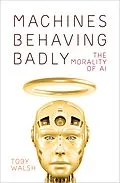
Can we build moral machines?
Artificial intelligence is an essential part of our lives - for better or worse. It can be used to influence what we buy, who gets shortlisted for a job and even how we vote. Without AI, medical technology wouldn't have come so far, we'd still be getting lost in our GPS-free cars, and smartphones wouldn't be so, well, smart. But as we continue to build more intelligent and autonomous machines, what impact will this have on humanity and the planet?
Professor Toby Walsh, a world-leading researcher in the field of artificial intelligence, explores the ethical considerations and unexpected consequences AI poses. Can AI be racist? Can robots have rights? What happens if a self-driving car kills someone? What limitations should we put on the use of facial recognition? Machines Behaving Badly is a thought-provoking look at the increasing human reliance on robotics and the decisions that need to be made now to ensure the future of AI is a force for good, not evil.
Autorentext
TOBY WALSH is one of the world's leading researchers in Artificial Intelligence. He is a Professor of Artificial Intelligence at the University of New South Wales and leads a research group at Data61, Australia's Centre of Excellence for ICT Research. He has been elected a fellow of the Association for the Advancement of AI for his contributions to AI research, and has won the prestigious Humboldt research award. He regularly appears on the BBC and writes for The Guardian, New Scientist, and The New York Times.
Klappentext
AI is rapidly becoming a pervasive and critical technology that invisibly permeates every aspect of our lives. It's a little like electricity - an essential, largely unseen component of our homes, farms, factories, shops and now even our cars. AI touches every stage of life, from the start (predicting which fertilised eggs to implant) to the very end (powering chatbots that spookily bring back the dead). At present, there are approximately 3 million robots working in factories around the world, and another 30 million or so in people's homes. Soon robots will outnumber humans. For the first time, we are giving technology autonomy. But what happens if an autonomous AI harms or kills a person, deliberately or accidentally? It will happen, in fact, it already has. AI is changing how we operate and shaping society in ways that we unaware of. It is influencing how we shop, how we live in our homes, how we vote, how we date, how and when we have sex, and what we think about those around us. Its presence in our lives means we need to get to grips with how it works and how it thinks, after all do we know: Is Alexa racist? Can (and will) AI help tackle the climate emergency? What limits should we place on face recognition software? Can robots have rights? And what regulations can we put in place to ensure AI makes the world a better place? In this compelling and, at times, unnerving book, Toby Walsh explores how AI is here to stay and although it may not be the stuff of science fiction, but it will undoubtedly change the future of the human race, for better or worse.