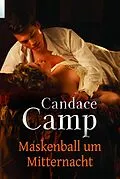
Auf einem Maskenball in London begegnet Callie einem mysteriösen Fremden. Erst rettet er sie vor einem aufdringlichen Verehrer, dann stiehlt er ihr dreist einen Kuss. Callie ist sofort hingerissen von diesem Mann - und kann nicht glauben, was ihr Bruder über ihn erzählt. Versucht der Earl of Bromwell wirklich nur aus Rache, ihr Herz zu erobern? Oder ist er das Opfer einer schmählichen Intrige? Auf der Suche nach der Wahrheit kommt Callie dem verführerisch charmanten Brom immer näher. Doch dann stößt sie auf ein Netz aus Lügen und Geheimnissen, das ihre junge Liebe auf eine gefährliche Probe stellt...
Gefährlich sexy " ein Muss für Romantic-Thriller-Fans!"RT Bookclub
Autorentext
Bereits seit über 20 Jahren schreibt die US-amerikanische Autorin Candace Camp Romane. Zudem veröffentlichte sie zahlreiche Romances unter Pseudonymen. Insgesamt sind bisher 43 Liebesromane unter vier Namen von Candace Camp erschienen. Ihren ersten Roman schrieb sie unter dem Pseudonym Lisa Gregory, er wurde im Jahr 1978 veröffentlicht. Weitere Pseudonyme sind Kristin James sowie Sharon Stephens, heute schreibt sie nur noch unter ihrem Mädchennamen Candace Camp. Seit sie denken kann, bereitete ihr das Ausdenken von Geschichten viel Freude. Ihre Mutter war Reporterin, ihr Vater Geschäftsführer einer Zeitung, bereits in jungen Jahren dachte sich Candace Camp Geschichten aus. Als Kind ließ sie ihrer Fantasie beim Spielen mit kleinen Figuren freien Lauf und erfand dabei Geschichten. Bereits im Alter von zehn Jahren schrieb sie erste Geschichten auf, schnell wurde das Schreiben zu ihrer liebsten Freizeitbeschäftigung. Allerdings blieb es ein Hobby, sie studierte an der Universität von Austin in Texas und wurde Lehrerin. Später zog sie nach North Caroline, arbeitete bei einer Bank und entdeckte ihre Vorliebe für Romances, es sind moderne Liebesromane. Während ihres Jura-Studiums an der Universität von North Carolina schrieb sie ihren ersten Liebesroman. Noch heute ist sie davon überzeugt, dass sie die Disziplin, die zum Schreiben eines Romans benötigt wird, durch ihr Jura-Studium erhielt. Nach den ersten Erfolgen gab sie ihre Arbeit in der Anwalts-Kanzlei auf, widmete sich ganz dem Schreiben von modernen Liebesromanen und denkt sich mit Begeisterung neue Geschichten aus. Geboren wurde Candace Camp am 23. Mai 1949 in Amarillo in Texas. Seit 1980 ist sie mit Pete Hopcus verheiratet, sie haben eine gemeinsame Tochter.
Inhalt
PREFACE xi
ACKNOWLEDGMENTS xv
1 MANUFACTURING 1
Introduction 1
Manufacturing Sequence 2
Product Life Cycles—There’s More Than One 3
Life Cycle Analysis 4
Potential for Waste and Value Added in Manufacturing 9
Vertically versus Horizontally Integrated Manufacturing 11
Waste and Its Unexpected Sources 13
The First Source of Waste 14
The Second Source of Waste 17
The Third Source of Waste 19
A New Product—First Phase for Waste Reduction 20
Existing Products—Second Phase for Waste Reduction 22
Regeneration 24
Life Cycle of the Manufacturing Facility 25
Creating a Classifi cation System for a Compliant and Profitable Manufacturing System 27
Summary 29
Selected Bibliography 31
2 BUILDING A DECISION-MAKING MODEL 33
Introduction 33
Industrial Production and Manufacturing 34
Classifying Manufacturing Industries 38
Major Product Groups from NAICS 40
Material Stocks 51
Major Material Families 52
Basic Process Classifi cations 53
Forming Processes 55
Separating Processes 56
Joining Processes 57
Conditioning Processes 58
Finishing Processes 59
Design Template for Classifying Manufacturing Processes 60
It All Began in Sally’s Garden 60
The Analysis 62
Next Steps 67
Selected Bibliography 68
3 ENVIRONMENTAL REGULATIONS, STANDARDS, AND PROFITABILITY 69
Introduction 69
Organizing to Comply—The Management Foundation 71
Formalizing the Management Approach—The ISO Standards 73
ISO 14000 Series of Standards 74
Overview of Major Environmental Regulations 75
Clean Air Act Overview 77
Clean Water Act Overview 79
Solid and Hazardous Waste Management Overview 81
Summary—Compliance Can Mean Profits 82
Selected Bibliography 84
4 CASE STUDIES 85
Introduction 85
Case Study 1 88
Introduction 88
Waste Minimization Programs 91
Reuse and Recycling Activities in the Office 92
Reduction and Reuse of Packaging 92
Comment 93
Case Study 2 93
Introduction 93
The Study and Methods Used 94
Conclusion 97
Comment 97
Case Study 3 98
Introduction 98
Description of the Manufacturing Operation 98
Manufacturing Operations and Sequence 99
Steps Taken to Lessen the Environmental Impact of the Manufacturing Facility 102
Material Waste Reduction 102
Resource Reduction 103
Methods the Company Uses to Identify and Make Improvements 104
Summary 105
Comment 106
Case Study 4 106
Introduction 107
Manufacturing Operations and Sequence 109
Steps Taken to Lessen the Environmental Impact of the Facility 111
Methods Used to Make Improvements 112
Examples of Waste Reduction 114
Comment 115
Case Study 5 115
Introduction 115
Singapore Packaging Agreement 117
The “Three Rs” Approach to Solid Waste Minimization 118
Comment 120
Conclusion 120
Selected Bibliography 121
5 AN OVERVIEW OF TOOLS USED TO IMPROVE MANUFACTURING OPERATIONS 123
Introduction 123
Waste Reduction: The Profi table and Compliant Process Chart—A Collaborative Tool for Both Groups and All Functions 128
Training and Development 129
Operator Self-Control 129
Culture Change 130
Manufacturing Engineering and Operations 131
Lean Manufacturing 132
Kaizen 135
Pareto Principle 136
Process Control 136
Certifi ed Management Systems 137
Design of Experiments 137
Poka-Yoke 138
Finding the Root Cause of a Problem 139
Fishbone or Ishikawa Diagram 139
Situational Awareness 140
Product Design 142
Design for Assembly 142
Human Resources 143
The Life Cycle 143
A Just-in-Time Workforce 144
Summary 147
Selected Bibliography 148
6 THE FACILITY 149
Introduction 149
Making a Building That Can Be Regenerated 152
Plant Location 152
Sustainable Design 154
A Sustainable Building 157
Construction Sequence 159
Life Cycle and Life Cycle Cost Analysis 160
Cost Analysis Software 163
The eQUEST® Program 164
The eVALUator Program 164
Building for Environmental and Economic Sustainability 166
Energy Star 167
Energy Management Program 169
Steps to Establish an Energy Management Program 170
International Standards for an Energy Management System 173
Leadership in Energy and Environmental Design 174
Summary 177
Selected Bibliography 178
7 APPLYING THE PROFITABLE AND COMPLIANT PROCESS CHART 181
Introduction 181
PCPC Worksheets 182
Using the Data Collection Worksheets 189
Step 1: Material Selection 189
Step 2: Process Identifi cation 190
Step 3: Outsourcing Manufacturing Processes 195
Summary 195
Industrial Applications of the PCPC 197
Application 1: Avionic Systems, Incorporated 198
Comment 198
Application 2: American Automotive Corporation 200
Comment 200
Application 3: NAVAC Logistics Center 202
Comment 202
Application 4: Custom Machine Builders …