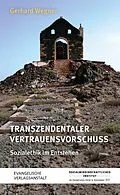
Christliche Sozialethik muss ihre Grundsätze und Empfehlungen auch für religiös unmusikalische Menschen plausibel formulieren. Sie erwächst jedoch immer wieder neu aus christlich-kommunikativer Praxis, in der Gottes Vertrauensvorschuss seine Verheißungen in Wirtschafts- und Sozialpolitik artikuliert werden. So kultiviert sie die Kraft des Mythos in Distanz zu einer vermeintlich rationalen und pluralen Welt. Und liefert zugleich praktikable Orientierungen in den Dilemmata, die unsere Welt heute auszeichnen. Von daher behandelt der Autor Beiträge zu aktuellen Problembereichen wie Gerechtigkeit, Populismus, Gewalt, Familien, Unternehmen, Staat und Religion. [Transcendental Credit of Trust. Social Ethics in Process] Christian social ethics have to formulate their principles and recommendations in a way that is also plausible for religiously unmusical people. These ethics emerge always fresh from a communicate Christian practice in which God's credit of trust his promises is articulated in the field of economic and social policies. In this way Christian social ethics cultivate a power of the myth in distance to an alleged rational and plural world, at the same time giving practical orientations in regard to the conflicts of our world. From this perspective the author reflects on contributions to current problem areas like justice, populism, violence, families, corporations, state, and religion.
Autorentext
Gerhard Wegner, Dr. theol., Jahrgang 1953, studierte Evangelische Theologie in Göttingen und Nairobi. Er ist Direktor des Sozialwissenschaftlichen Instituts der EKD in Hannover und apl. Professor für Praktische Theologie an der Universität Marburg.
Zusammenfassung
Christliche Sozialethik muss ihre Grundsatze und Empfehlungen auch fur religios unmusikalische Menschen plausibel formulieren. Sie erwachst jedoch immer wieder neu aus christlich-kommunikativer Praxis, in der Gottes Vertrauensvorschuss - seine Verheiungen - in Wirtschafts- und Sozialpolitik artikuliert werden. So kultiviert sie die Kraft des Mythos in Distanz zu einer vermeintlich rationalen und pluralen Welt. Und liefert zugleich praktikable Orientierungen in den Dilemmata, die unsere Welt heute auszeichnen. Von daher behandelt der Autor Beitrage zu aktuellen Problembereichen wie Gerechtigkeit, Populismus, Gewalt, Familien, Unternehmen, Staat und Religion. [Transcendental Credit of Trust. Social Ethics in Process]Christian social ethics have to formulate their principles and recommendations in a way that is also plausible for religiously unmusical people. These ethics emerge always fresh from a communicate Christian practice in which God's credit of trust - his promises - is articulated in the field of economic and social policies. In this way Christian social ethics cultivate a power of the myth in distance to an alleged rational and plural world, at the same time giving practical orientations in regard to the conflicts of our world. From this perspective the author reflects on contributions to current problem areas like justice, populism, violence, families, corporations, state, and religion.
Titel
Transzendentaler Vertrauensvorschuss
Untertitel
Sozialethik im Entstehen
Autor
EAN
9783374058662
Format
E-Book (pdf)
Hersteller
Genre
Digitaler Kopierschutz
Wasserzeichen
Dateigrösse
3.96 MB
Anzahl Seiten
336
Lesemotiv
Unerwartete Verzögerung
Ups, ein Fehler ist aufgetreten. Bitte versuchen Sie es später noch einmal.