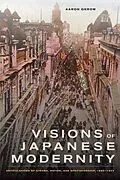
Japan has done marvelous things with cinema, giving the world the likes of Kurosawa, Mizoguchi, and Ozu. But cinema did not arrive in Japan fully formed at the end of the nineteenth century, nor was it simply adopted into an ages-old culture. Aaron Gerow explores the processes by which film was defined, transformed, and adapted during its first three decades in Japan. He focuses in particular on how one trend in criticism, the Pure Film Movement, changed not only the way films were made, but also how they were conceived. Looking closely at the work of critics, theorists, intellectuals, benshi artists, educators, police, and censors, Gerow finds that this trend established a way of thinking about cinema that would reign in Japan for much of the twentieth century.
Autorentext
Inhalt
Autorentext
Aaron Gerow is Associate Professor of Japanese Cinema in the Film Studies Program and East Asian Languages and Literatures at Yale University. He is the author of Kitano Takeshi, A Page of Madness: Cinema and Modernity in 1920s Japan, and Reference Guide to Japanese Film Studies, coauthored with Abé Mark Nornes.
Inhalt
Contents
List of Illustrations
Acknowledgments
Introduction
1. The Motion Pictures as a Problem
2. Gonda Yasunosuke and the Promise of Film Study
3. Studying the Pure Film
4. The Subject of the Text: Benshi, Authors, and Industry
5. Managing the Internal
Conclusion: Mixture, Hegemony, and Resistance
Notes
Selected Bibliography
Index
Titel
Visions of Japanese Modernity
Untertitel
Articulations of Cinema, Nation, and Spectatorship, 1895-1925
Autor
EAN
9780520945593
Format
E-Book (epub)
Hersteller
Veröffentlichung
14.05.2010
Digitaler Kopierschutz
Wasserzeichen
Anzahl Seiten
344
Unerwartete Verzögerung
Ups, ein Fehler ist aufgetreten. Bitte versuchen Sie es später noch einmal.