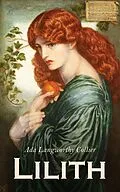
Ada Langworthy Collier's Lilith: The Legend of the First Woman is a learned nineteenth-century poetic reimagining of the apocryphal figure who, in rabbinic and folkloric tradition, precedes Eve. Written in elevated, Miltonic blank verse, the work transforms a marginal demonological legend into a tragic meditation on pride, desire, exile, and female autonomy. Situated within Victorian and American Romantic engagements with biblical myth, it belongs to a broader era of scriptural revision in which inherited narratives were tested against modern moral and psychological concerns. Collier, an American writer from Iowa, was intellectually formed in a culture where women's education, authorship, and public voice were increasingly debated. Her choice of Lilith is therefore significant: the legend offered a powerful vehicle for exploring the costs of rebellion and the constraints placed upon women within theological and social orders. Collier's literary ambition and command of classical-biblical diction reveal an author seeking to enter serious poetic discourse. Readers interested in feminist literary history, biblical reception, and nineteenth-century narrative poetry will find Lilith richly rewarding. It is both a product of its age and a strikingly prescient work, giving imaginative dignity to a figure long treated as monstrous. This enriched edition has been carefully crafted to add value to your reading experience. - Hand-picked Memorable Quotes shine a spotlight on moments of literary brilliance.
Zusammenfassung
Lilith, The Legend of the First Woman is a rendition of the old rabbinical legend of Lilith, the first woman, whose life story was dropped unrecorded from the early world, and whose home, hope, and Eden were passed to another woman. The author warns us in her preface that she has not followed the legend closely. In her hands, Lilith becomes an embodiment of mother-love that has existed forever, and it is her name that lends its itself to the lullabies repeated to young children. The author not only freely changes the legend of Lilith, but is free with the unities of her own story. It is full of internal inconsistencies in narrative, and anachronisms. The legend is to the effect that God first created Adam and Lilith, equal in authority; that the clashing this led to was so great, that Lilith was cast out from Eden, and the marital experiment tried again, on a different principle, by the creation of Eve.