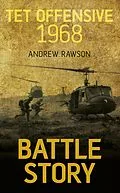
By the end of January 1968 the American people thought their armed forces were winning in South Vietnam after three years of escalating conflict. Then the North Vietnamese Army and Viet Cong struck back, hitting military and political targets across the country. While the NVA and Viet Cong suffered a military defeat, they dealt a huge blow to US support for the war. If you want to understand what happened and why - read Battle Story. Detailed profiles examine the background of the opposing commanders, as well as the contrasting tactics and equipment of their fighting forces. Contemporary accounts reveal the true story of this pivotal battle and its consequences for the Vietnam War. Specially commissioned maps analyse the key developments during the battle. Excellent photographs place the reader at the centre of the fighting. Orders of battle show the composition of the opposing forces' armies.
Autorentext
ANDREW RAWSON is a freelance writer who has written several books, covering campaigns from the Napoleonic Wars, World War I and World War II, including the British Army Handbook, 1914-1918, Vietnam War Handbook and The Third Reich 1919-1939 for The History Press.
Klappentext
By 31 January 1968 the US had been fighting the Vietnam War for more than ten years, but the American people never thought they wouldn't win. The Tet Offensive changed all that. Over seven bloody months the North Vietnamese Army and the Viet Cong launched hundreds of attacks cross South Vietnam, hitting military and political targets, including the United States embassy. While the attacks in and around Saigon in the south were quashed quickly, there was a prolonged battle for the city of Hue in the north. The 77-day siege captured the imagination of the world as the US Marines fought a desperate battle against overwhelming odds. As the offensive petered out and the US military re-established control, the generals in Saigon and the politicians in Washington DC were forced to reassess their strategy for South Vietnam. Involving over 1.5 million combatants, of whom more than 50,000 were killed, not to mention the thousands of civilian casualties, the Tet Offensive was a bitter political victory for the communist forces. This book gives a clear, concise account of those dramatic days in 1968, supported by a timeline of events and orders of battle, and illustrated with over fifty photographs.