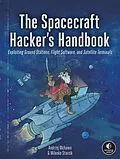
Satellites power our internet, GPS, weather forecasts, defense systems-and they're all at risk. Can you really hack a spacecraft? Yes, but probably not the way you think. Satellites rarely fall out of the sky, and this book won't tell you how to make them crash. But vulnerabilities can expose sensitive data, disrupt communications, manipulate onboard systems, and even allow attackers to take control of mission operations. The Spacecraft Hacker's Handbook takes you inside the hidden world of spacecraft cybersecurity. Through hands-on labs, you'll write working exploits and uncover vulnerabilities in flight software. From NASA flight software and CCSDS protocols to SATCOM terminals and GNSS attacks, you'll gain practical experience with the technologies that power modern space missions. Learn how to:
- Work with mission control software, including Yamcs and OpenC3 COSMOS
- Explore NASA's F′ and core Flight System (cFS)
- Analyze CCSDS spacecraft communications
- Reproduce actual space cyberattacks in a safe environment
- Discover, validate, and responsibly disclose new vulnerabilities
- Windows, macOS, or Linux
- Docker and a virtualization platform
- Basic ability to read source code in Python, Java, and C
- No specialized radio or satellite hardware required
Autorentext
Andrzej Olchawa is an offensive security researcher with more than 15 years of experience in the space industry. He has presented his research at Black Hat and DEF CON, and is credited with multiple CVEs.
Milenko Starcik leads the cybersecurity team at VisionSpace, where he helps protect space systems. With a decade of experience in the space industry, he has presented research at Black Hat, DEF CON, and space conferences.