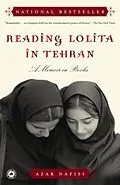
#1 NEW YORK TIMES BESTSELLER • SOON TO BE A MAJOR MOTION PICTURE • ONE OF THE BEST NONFICTION BOOKS OF THE CENTURY*
In this celebrated modern classic, a former teacher in revolutionary Iran tells the extraordinary true story of the women who risked their lives to study Western literature in her living room.
"Stunning . . . a literary life raft on Iran's fundamentalist sea."-Margaret Atwood, author of The Handmaid's Tale
"An intimate memoir of life under a repressive regime and a celebration of the vitality of literature . . . as rich and profound as the novels Nafisi teaches."-The Miami Herald
Every Thursday morning for two years in the Islamic Republic of Iran, Azar Nafisi, a bold and inspired teacher, secretly gathered seven of her most committed female students to read forbidden Western classics.
Some of the women came from conservative and religious families, others were progressive and secular; some had spent time in jail. They were shy and uncomfortable at first, unaccustomed to being asked to speak their minds, but soon they removed their veils and began to speak more freely-their stories intertwining with the novels they were reading by Jane Austen, F. Scott Fitzgerald, Henry James, and Vladimir Nabokov.
As Islamic morality squads staged arbitrary raids in Tehran, as fundamentalists seized hold of the universities and a blind censor stifled artistic expression, the women in Nafisi's living room spoke not only of the books they were reading but also about themselves, their dreams, and disappointments.
Azar Nafisi's luminous masterwork gives us a rare glimpse, from the inside, of women's lives in revolutionary Iran. Reading Lolita in Tehran is a work of great passion and poetic beauty, a remarkable exploration of resilience in the face of tyranny, and a celebration of the liberating power of literature.
*Kirkus Reviews
Klappentext
We all have dreams-things we fantasize about doing and generally never get around to. This is the story of Azar Nafisi's dream and of the nightmare that made it come true.
For two years before she left Iran in 1997, Nafisi gathered seven young women at her house every Thursday morning to read and discuss forbidden works of Western literature. They were all former students whom she had taught at university. Some came from conservative and religious families, others were progressive and secular; several had spent time in jail. They were shy and uncomfortable at first, unaccustomed to being asked to speak their minds, but soon they began to open up and to speak more freely, not only about the novels they were reading but also about themselves, their dreams and disappointments. Their stories intertwined with those they were reading-Pride and Prejudice, Washington Square, Daisy Miller and Lolita-their Lolita, as they imagined her in Tehran.
Nafisi's account flashes back to the early days of the revolution, when she first started teaching at the University of Tehran amid the swirl of protests and demonstrations. In those frenetic days, the students took control of the university, expelled faculty members and purged the curriculum. When a radical Islamist in Nafisi's class questioned her decision to teach The Great Gatsby, which he saw as an immoral work that preached falsehoods of "the Great Satan," she decided to let him put Gatsby on trial and stood as the sole witness for the defense.
Azar Nafisi's luminous tale offers a fascinating portrait of the Iran-Iraq war viewed from Tehran and gives us a rare glimpse, from the inside, of women's lives in revolutionary Iran. It is a work of great passion and poetic beauty, written with a startlingly original voice.
Praise for Reading Lolita in Tehran
"Anyone who has ever belonged to a book group must read this book. Azar Nafisi takes us into the vivid lives of eight women who must meet in secret to explore the forbidden fiction of the West. It is at once a celebration of the power of the novel and a cry of outrage at the reality in which these women are trapped. The ayatollahs don' t know it, but Nafisi is one of the heroes of the Islamic Republic."-Geraldine Brooks, author of Nine Parts of Desire