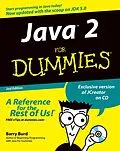
- This updated bestseller covers programming essentials for the newest version of Java, the popular platform-independent, object-oriented programming language
- The material is fully updated and focuses on the new Java SDK 1.5, addressing the needs of new or inexperienced Java developers
- The fun and easy writing style walks readers through Java syntax basics and helps them write their first program
- Shows readers how to create basic Java objects and figure out when they can reuse existing code
- The new edition is also modified to better address the readers who may have some programming knowledge, but who are new to Java
Autorentext
Barry Burd is the author of Java 2 For Dummies, Beginning Programming with Java For Dummies, and Java & XML For Dummies, and a computer science professor at Drew University.
Klappentext
Make the jump to Java and JDK 5.0
Your first step toward building Java-powered applications
Whether you’re creating your first program or adding Java to your development toolbox for the first time, this book is the place to start. With Java trainer Barry Burd showing you the way, you’ll be creating your first Java application in no time!
All this on the bonus CD-ROM
- Exclusive build of JCreator customized for use with code in the book
- A trial version of Jindent, NetCaptor freeware and DJ Java Decompiler freeware versions
Discover how to:
- Think like an object-oriented programmer
- Save time by reusing code
- Break a project into manageable pieces
- Diagnose problems and squash bugs
- Formulate your program’s business logic
Inhalt
Introduction.
Part I: Getting Started.
Chapter 1: All about Java.
Chapter 2: Running Canned Java Programs.
Chapter 3: Using the Basic Building Blocks.
Part II: Writing Your Own Java Programs.
Chapter 4: Making the Most of Variables and Their Values.
Chapter 5: Controlling Program Flow with Decision-Making Statements.
Chapter 6: Controlling Program Flow with Loops.
Part III: Working with the Big Picture: Object-Oriented Programming.
Chapter 7: Thinking in Terms of Classes and Objects.
Chapter 8: Saving Time and Money: Reusing Existing Code.
Chapter 9: Constructing New Objects.
Part IV: Savvy Java Techniques.
Chapter 10: Putting Variables and Methods Where They Belong.
Chapter 11: Using Arrays and Collections to Juggle Values.
Chapter 12: Looking Good When Things Take Unexpected Turns.
Part V: The Part of Tens.
Chapter 13: Ten Ways to Avoid Mistakes.
Chapter 14: Ten Sets of Web Resources for Java.
Part VI: Appendixes.
Appendix A: Using the CD-ROM.
Appendix B: When to Use Words Like public and private.
Index.
End-User License Agreement.