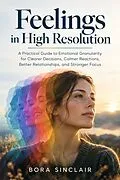
Feelings in High Resolution
A Practical Guide to Emotional Granularity for Clearer Decisions, Calmer Reactions, Better Relationships, and Stronger Focus
You know the feeling. Something is wrong, but the only words that come to mind are stressed, upset, anxious, or overwhelmed.
The problem is that broad labels lead to broad solutions.
If you call resentment "stress," you may keep trying to relax instead of setting a boundary. If you call disappointment "anger," you may start a fight when what you really need is to acknowledge an unmet expectation. If you call exhaustion "lack of motivation," you may push harder when your body is asking for recovery.
Feelings in High Resolution shows you how to make finer, more useful distinctions in your emotional life so you can respond to the actual problem in front of you.
Psychologists often call this skill emotional granularity or emotion differentiation: the ability to distinguish among emotional states with greater specificity. Instead of stopping at "I feel bad," you learn to notice whether you are apprehensive, resentful, exposed, lonely, discouraged, embarrassed, envious, relieved, or something else.
That extra precision can change what you do next.
This book turns the research into a practical system you can use in ordinary life. You will learn to separate feelings from thoughts, body sensations, interpretations, and action urges. You will also learn how to use emotional language without overanalyzing yourself or turning every difficult moment into a therapy session.
Inside the Book
You will learn how to:
- Replace vague labels such as stressed, bad, and overwhelmed with more useful descriptions.
- Tell the difference between nearby emotions such as irritation, frustration, anger, and resentment.
- Distinguish guilt, shame, embarrassment, and regret so you can choose repair instead of unnecessary self-attack.
- Use body sensations as evidence without treating them as a mystical codebook.
- Recognize when anxiety is really uncertainty, exposure, dread, insecurity, or anticipation.
- Identify what envy is telling you about your wants instead of treating it as a character flaw.
- Notice positive emotions with greater precision, including relief, pride, contentment, interest, affection, gratitude, and joy.
- Use emotional information to make clearer decisions without letting one strong feeling take control.
- Understand the emotional side of procrastination, perfectionism, distraction, and loss of focus.
- Communicate more clearly in relationships by separating observable events from interpretations and accusations.
- Detect resentment before it hardens into a long-running boundary problem.
- Journal in a way that reveals patterns instead of simply rehearsing the same story.
- Work with numbness, overwhelm, and "I don't know what I feel" without forcing a label.
- Adapt emotional awareness to culture, language, neurodiversity, and individual differences.
- Avoid the trap of turning emotional precision into another form of overthinking.
A Practical Skill, Not a Vocabulary Contest
You do not need to memorize hundreds of emotion words.
The book teaches a simpler approach: start with the emotional territory, notice the level of activation, identify what your attention is doing, consider what seems to be at stake, and choose one or two words that improve your understanding.
Sometimes sad is precise enough. Sometimes angry is the right word. The goal is useful resolution, not impressive language.
You will also learn when to stop analyzing. A label has done its job when it helps you understand the situation and choose a sensible response.
Better Decisions Begin With Better Distinctions
Strong emotions can make an interpretation feel like a fact.