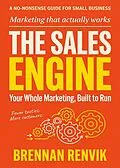
What if your marketing could finally run like a system instead of a scramble of disconnected tactics?
Most small business owners aren't failing because they lack effort, creativity, or tools. They're drowning in options-more platforms, more posts, more campaigns-mistaking activity for progress while growth stays flat. The Sales Engine replaces that exhausting noise with a single, connected system where every part supports the next.
Drawing on real business stories and proven principles, this book shows you how to build a one-page plan and the discipline to focus on a few things long enough to make them work. From defining exactly who you serve to turning first-time buyers into loyal fans, The Sales Engine gives you the architecture your marketing has been missing.
Inside, you'll discover:
- How to escape the "Everything Everywhere" trap and choose the few channels that actually pay you back
- The math that reveals what a customer is really worth-and how much you can rationally spend to win one
- How to craft offers people feel foolish refusing by reducing risk, not slashing prices
- The quiet art of nurturing prospects until they're ready to buy
- Why repeat buyers and referrals are the hidden engine of profit
- How to build a simple dashboard that tells you exactly what to fix next
Stop chasing tactics. Start building an engine that runs.
Autorentext
Brennan Renvik is an American consultant and former operations executive specializing in operational efficiency, leadership, and the personal productivity of technology-company leaders. He earned an engineering degree from a leading American university and an MBA from a top U.S. business school, then spent twelve years in the SaaS and fintech industries, rising from head of operations to COO. He led one B2B SaaS company through growth from $7M to $90M in ARR and a successful exit, and later served as COO of a fintech unicorn with fifteen hundred people across ten time zones. That experience became the source of his "Single Action Method": every project, meeting, document, or decision must end with a single next step, a specific owner, and a specific date. Today he runs his own consulting practice for the CEOs and COOs of scale-up companies, leads cohort programs for operations directors, and coaches senior executives on leadership and personal effectiveness. His books explore operational discipline in the era of distributed work, leadership as a daily engineering task, and the personal productivity of the leader.