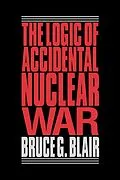
The end of the cold war and the disintegration of the Soviet Union has not eliminated the threat posed to international security by nuclear weapons. The Soviet breakup actually created a new set of dangers: the accidental or unauthorized use of nuclear weapons and the illicit transfer of nuclear warheads, technology, or expertise to the Third World.
The Logic of Accidental Nuclear War analyzes the danger of nuclear inadvertence lurking in the command and control systems of the nuclear superpowers. Foreign policy expert Bruce G. Blair identifies the cold war roots of the contemporary risks and outlines a comprehensive policy agenda to strengthen control over nuclear forces.
Based on discussions with numerous U.S. and Russian experts, including Russian launch officers who served in the strategic rocket forces and ballistic missile submarines, this book reveals a wealth of new facts about the hidden history of U.S. and Soviet nuclear crisis alerts and exercises. It is a richly detailed, rigorous, and authoritative account of nuclear operations and overturns much conventional wisdom on the subject.
Autorentext
Bruce G. Blair is a senior fellow in the Foreign Studies program at the Brookings institution and the author of numerous books, including The Logic of Accidental Nuclear War.
Blair received a MacArthur Fellowship in 1999 for his work demonstrating the dangers of Cold War and post-Cold War nuclear command and control. The award was also granted on the basis of Blair's work on devising credible policy alternatives, including "de-alerting" nuclear weapons and changing nuclear decision-making processes to allow for careful and collective deliberation before any decision to launch could be made.
In 2013, Blair joined the research staff at SGS, which is based at the Princeton School of Public and International Affairs.