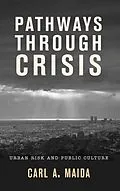
When densely populated urban areas face severe crises-natural disasters, epidemics, sudden unemployment, massive immigration-they often find that established mechanisms cannot respond adequately to the problems. Carl Maida argues that solutions to these problems tend to be developed within the affected communities themselves. In Pathways through Crisis, he draws on his two decades of work in ethnography and with crisis centers in the Los Angeles area to study the kinds of informal organizations that arise at the grass-roots level in order to deal with severe crises. This ground-breaking examination of responses to urban disaster suggests how both informal and formal organizations can be developed to serve people under extreme duress.
Autorentext
Carl A. Maida is a professor of public health at UCLA, where he teaches in the Graduate Program in Oral Biology and the Institute of the Environment.
Inhalt
Chapter 1 Introduction
Chapter 2 Chapter 1. A World of Strangers
Chapter 3 Chapter 2. Global Economy and Local Dilemma
Chapter 4 Chapter 3. Campaign against Stigma
Chapter 5 Chapter 4. Facing Crises through Culture
Chapter 6 Chapter 5. Strangers in the City
Chapter 7 Chapter 6. Worlds Turned Upside Down
Chapter 8 Chapter 7. The City is the Frontier
Chapter 9 Chapter 8. Common Worlds