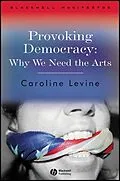
A provocative and compelling book that explores the complex
relationship between democracy and avant-garde art, offering a
surprising new perspective on the critical role that the arts play
in democratic governance at home and abroad.
* Covers a broad range of topics, from disputes over public art,
copyright, and obscenity, to the operations of the House
Un-American Activities Committee during the Cold War
* Highlights detailed and at times shocking debates over the role
of the rebellious artist within society
Autorentext
Caroline Levine is Associate Professor of English at the University of Wisconsin-Madison. A specialist on relations between art and politics, she is author of The Serious Pleasures of Suspense, which won the Perkins Prize for the best contribution to narrative studies in 2004. She has co-edited three collections of essays, including a special issue of The Journal of Popular Culture on the politics of pleasurable reading, and has published articles on a range of writers and artists, including John Ruskin, Elizabeth Barrett Browning, Charlotte Brontë, Andreas Gursky, and Richard Serra.
Klappentext
Provoking Democracy makes an exciting and compelling new argument: that democracies require art - challenging art - to ensure that they are acting as free societies. In the twentieth century, democratic societies turned to dissenting and unpopular artists such as Jackson Pollock, Bertolt Brecht, D. H. Lawrence, and 2 Live Crew to prove their commitment to freedom from majority rule. Author Caroline Levine shows how artists in the tradition of the avant-garde may once again prove to be effective catalysts for contemporary change.
Moving beyond debates over obscenity, public funding, and censorship, Provoking Democracy gets at art's value and purpose in democratic societies, concluding that the most rebellious artists need the protection of the democratic state, just as the freest and fairest democracies need the provocations of art.
Zusammenfassung
A provocative and compelling book that explores the complex relationship between democracy and avant-garde art, offering a surprising new perspective on the critical role that the arts play in democratic governance at home and abroad.
- Covers a broad range of topics, from disputes over public art, copyright, and obscenity, to the operations of the House Un-American Activities Committee during the Cold War
- Highlights detailed and at times shocking debates over the role of the rebellious artist within society
Inhalt
Preface.
1. Democracy Meets the Avant-Garde.
2. The People v. the Arts.
3. Propaganda for Democracy: The Avant-Garde Goes to War.
4. Obscenity and the Democratization of Culture.
5. Originality on Trial.
Conclusion: Artists, Academic Writing, and the Classroom.
Notes.
Index.
.