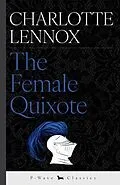
In Volume II of Charlotte Lennox's The Female Quixote; or, The Adventures of Arabella, Arabella's romance-shaped imagination collides ever more dramatically with the realities of eighteenth-century society. Convinced that honour, jealousy, captivity, and heroic devotion govern the world around her, she interprets every encounter through the grand narratives of the French romances she adores, often with bewildering consequences for those who attempt to guide her towards common sense.
Celebrated by Samuel Johnson and admired by Henry Fielding, Lennox's novel is both witty and deeply perceptive, exploring the power of literature to shape not only our dreams but our understanding of the world itself. At its centre stands Arabella, a heroine of striking intelligence and independence, whose moral seriousness and imaginative conviction set her apart from those around her.
Presented here in its original two-volume form, this P-Wave Classics edition offers a carefully established text based on the 1752 edition, with modernised spelling for readability. The introduction, essay on The World of French Romance, and Glossary of the Romance Worldappear in Volume I.
Edited with notes and an introduction by L.A. Davenport.
Autorentext
Charlotte Lennox (c.1729-1804) was an English novelist, critic, and translator whose work was admired by leading literary figures including Samuel Johnson and Henry Fielding. Born in Gibraltar and raised in England, she supported herself through a wide-ranging literary career that included poetry, fiction, translation, and criticism. Her best-known novel, The Female Quixote (1752), is a witty and perceptive exploration of reading, imagination, and women's education. Long neglected, Lennox is now recognised as a central figure in the development of the English novel.