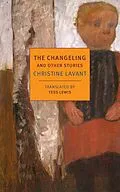
Haunting and strikingly idiosyncratic stories of childhood, disability, and rural prejudice from an Austrian writer rarely translated into English.
Only in recent years has Christine Lavant come to be widely recognized as a major contributor to postwar Austrian liter-ature, with her work-mystical, skeptical, unrepentantly rebellious, and imbued with a deep reverence for nature-finding a place alongside that of writers such as Ingeborg Bachmann and Thomas Bernhard. Growing up in the early twentieth century, living in poverty in rural southern Austria, often sick, seldom in school, Lavant became an insatiable reader with a keen ear for local stories of "adultery manslaughter infanticide arson displaced boundary stones hauntings calamities lawsuits fits of insanity, deadly feuds." Fascinated, like Eudora Welty and Flannery O'Connor, by the grotesque and mysterious, Lavant also possesses an unsentimental empathy for the powerless and the afflicted, a sensitivity to the absurdity and indignities of the human condition, and an instinctual grasp of the drive to self-deceit, even as she is ever-alert to the unpredictable actions of divine grace. Tess Lewis's fine translation of Lavant's stories is the first collection of her fiction to appear in English.
Autorentext
Christine Lavant (1915-1973) was one the most significant poets of twentieth-century Austria, though she remained obscure during her life. Born the last of nine children into a nearly destitute miner's family, she was plagued as a child by ill health and received only four years of formal schooling. An autodidact, she described her life as a story of emancipation through reading. In 1945, inspired by Hamsun and Rilke, she began writing what would eventually amount to thousands of pages of poetry and prose, all while supporting herself and her husband with her knitting. She eventually won several major awards for her writing, including the Georg Trakl Prize for poetry (twice) and the Grand Austrian State Literature Prize. Lavant gave a few public readings during her lifetime and frequented the Lampersbergers' avant-garde circle at Tonhof Maria Saal (satirized in Thomas Bernhard's Woodcutters), but she preferred a life of relative seclusion.
Tess Lewis is a translator from French and German. For New York Review Books, she has translated work by Walter Benjamin, Ernst Jünger, and Lutz Seiler.