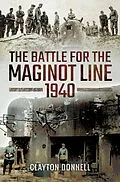
This vividly detailed WWII history offers an in-depth look at the French military fortifications designed to deter German invasion.
Before the outbreak of the Second World War, the French military constructed an extensive network of bunkers, forts, and weapons installations along the country's eastern border. In this detailed and graphic historical account, Clayton Donnell examines what it was like for French soldiers to defend the Maginot Line when the Germans invaded in 1940. He also interrogates the popular opinion that it was a strategic and tactical disaster.
Donnell gives readers an inside view of life in the bunkers, capturing the camaraderie of soldiers and the terror of the German attacks. He examines the construction and development of the Maginot Line, describing its layout from Dunkirk to Switzerland, and across the island of Corsica, in expert detail. But the narrative concentrates on its performance in combat and the experience of the soldiers who manned it as the German offensive broke over them.
Autorentext
Clayton Donnell is retired from the US Air Force. He has a degree in history and has passionately studied military history and fortress engineering for thirty years. Clayton lived for many years in Europe and studied the architecture and archaeology of the most renowned fortress systems of Belgium, France and Germany. He created the first internet site in the world in English about the Maginot Line, and another on the fortress and Battle of Lige, Belgium.
Klappentext
What was it like as a French soldier to defend the Maginot Line when the Germans invaded in 1940, and was the line really a strategic and tactical disaster a massive waste of resources? Clayton Donnell's expert, finely detailed and graphic account of the role of the Maginot Line in the defense of France gives the reader an inside view of life in the bunkers, casemates and forts the sights, the sounds and the terror of the German attacks. And it questions common assumptions about the effectiveness of the resistance offered by the defenders and the impact the line had on the German assault. The layout of the line from Dunkirk to Switzerland, along the Alpine passes to the Riviera, and on the island of Corsica is described in expert detail, as is its history, construction and development. But the narrative concentrates on its performance in combat and the experience of the soldiers who manned it as the German offensive broke over them.