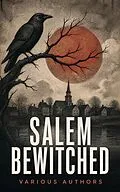
Salem Bewitched gathers a striking archive of interpretation around the Salem witchcraft crisis, bringing together theological polemic, eyewitness-inflected recollection, local history, antiquarian inquiry, and later popular or psychological speculation. The volume traces how a single episode became a durable American cultural text: a site of contested evidence, religious anxiety, communal memory, and moral judgment. Early ministerial writings stand beside nineteenth-century historical reassessments, allowing the reader to observe not only the events' representation but also the changing methods used to explain them. Its contributors span generations of New England religious and literary culture. Cotton Mather and Increase Mather represent the Puritan intellectual world in which providence, invisible agency, confession, and legal testimony carried urgent significance. Charles Wentworth Upham, M. V. B. Perley, James Thacher, William P. Upham, and Samuel Roberts Wells reflect later efforts to recover documents, narrate local pasts, and reinterpret the crisis through historical, rationalist, and emerging scientific frameworks. Their juxtaposition illuminates the passage from colonial theology to modern historiography. Recommended for students of American literature, religion, history, and folklore, Salem Bewitched offers an exceptional opportunity to read competing explanations in direct dialogue. Its breadth makes it valuable both as a sourcebook and as a study in how cultures repeatedly revise their most troubling inheritances.
Zusammenfassung
The Salem witch trials were a series of hearings and prosecutions of people accused of witchcraft in colonial Massachusetts between February 1692 and May 1693. More than 200 people were accused, 19 of whom were found guilty and executed by hanging (14 women and 5 men). One other man, Giles Corey, was crushed to death for refusing to plead, and at least five people died in jail. It was the deadliest witch hunt in the history of colonial North America. This collection contains works that concern this infamous witch hunt and trials: The Wonders of the Invisible World by Cotton Mather and Increase Mather Salem Witchcraft by Charles Wentworth Upham Salem Witchcraft and Cotton Mather by Charles Wentworth Upham A Short History of the Salem Village Witchcraft Trials by M. V. B. Perley An Account of the Witchcraft Delusion at Salem in 1682 by James Thacher House of John Procter, Witchcraft Martyr, 1692 by William P. Upham The Salem Witchcraft by Samuel Roberts Wells