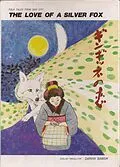
This collection of Seki City folktales became very popular when originally published in Japanese by local writers who studied the legends, history and fairy tales of the area.
Darvin Babiuk, who worked for Seki City Hall as Coordinator for International Relations, then tackled the problem of writing an English verstion that Japanese students of English could understand.
I hope this series of Seki folktales will be enjoyed by peoples throughout the world.
Autorentext
Author of his own misfortunes, Darvin Babiuk writes history, novels, short stories, translations, articles, shopping lists, and has more than once been considered a write-off. He hopes to be around to write his own obituary. Friends and relatives say he has never been the same after the tragic incident at the Moose Factory 47th annual Dmitro Petrycyshyn Pickerel and Perogies Cribbage tournament. His turn-ons include women with mustaches, Men Without Hats (The musical group, silly!), honey Dijon mustard and leopard frogs. If he were a vegetable, he'd be a beet, pithy but misunderstood. He wishes he could write like Scarlett Johansson's voice sounds. He has lived and worked in a number of overseas locations in Asia, Africa and the Middle East.
Klappentext
The collection of Seki City folktales called "The Love of a Silver Fox" became very popular in Seki when originally published in Japanese. Readership and popularity have since spread.
This collection was created by local writers who have studied the legends, old tales and fairy tales about and relating to Seki. The writers wrote down the stories which have passed from generation to generation orally in Seki since long ago.
This time, in order to help educate our children who live in an international society, a five-volume series of the "Love of Silver Fox" collection has been published in English.
To make this five-volume series, Mr. Darvin Babiuk, who worked for Seki City Hall as an Assistant English Teacher (AET) from 1991-1994, tackled the problem of writing an English verstion that Japanese students of English could understand.
To have this easy-to-understand English series close at hand, to use initially as a textbook, makes me very happy. Furthermore, I hope this series of Seik folktales can be spread throughout the world by having the series with us whenever we meet people of other countries.
Finally, from my heart, I want to thank Mr. Darvin Babiuk, the writers of the Japanese version, the English version committee, and Seki's teachers of English for their work in publishing this series.
Seki City Board of Education Superintendent
Masaichi Funato