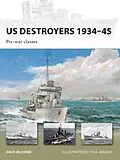
Since the beginning of the 20th century, destroyers have been all-purpose ships, indispensable from delivering the mail at sea to screening other vessels and, where larger ships were not present, forming the front line in battle.
This illustrated guide details the 169 ships of ten classes introduced in the 1930s: early 1,500-tonners and 1,850-ton destroyer leaders designed to conform to the 1930 London Naval Treaty, plus the successor 1,570-ton Sims class and 1,620and 1,630-ton Benson and Gleaves classes.
In wartime, most 1,500-tonners and leaders initially saw front line duty in the Pacific but were relegated to secondary assignments as newer vessels arrived; while the later 1,620 and 1,630-tonners became the standard destroyers of the Atlantic War. This volume reveals the fascinating design story behind these pioneering classes - from the constraints of peacetime treaties to advances in propulsion engineering, and wartime modifications.
With an operational overview of their service and tables listing all ships by class, builder, and initial squadron, this is the definitive guide to the pre-war US destroyer classes.
Autorentext
Dave McComb, President of the Destroyer History Foundation, is a well-known racing sailor and lifelong student of naval history who has organized shipmate events and delivered presentations to veterans' groups and active duty commands. He lives on Lake George, New York, USA.
Paul Wright has painted ships of all kinds for most of his career, specializing in steel and steam warships from the late 19th century to the present day. He is a Member of the Royal Society of Marine Artists and has illustrated the works of Patrick O'Brian, Dudley Pope and C.S. Forester amongst others.
Inhalt
Introduction
Design and development
Service modifications and conversions
Operational histories
Conclusion