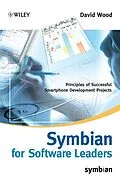
As a co-founder of Symbian and former executive of Psion Software,
David Wood has been actively involved in well over 100 smartphone
development projects worldwide. Over the time spent on these
projects, he has come to understand the key issues which determine
the difference between successful and unsuccessful projects for
Symbian OS. This book highlights and explains:
* How to tame the awesome inner complexity of smartphone
technology
* Optimal project team organisation, combining agility and
reliability
* The design and the philosophy behind key features of Symbian
OS
* The potential trouble spots of smartphone integration, testing,
and optimisation
* How to receive the full benefit of the diverse skills in the
extensive Symbian partner ecosystem
* The methods that are most likely to deliver commercial success
when using Symbian OS
* The wider significance of Symbian OS skills and expertise in
the evolving mobile marketplace
* The particular importance of software leaders in bringing
breakthrough smartphone products to the market
Autorentext
David Wood was a co-founder of Symbian, having joined Psion (Symbian's original parent company) in June 1988. As EVP of Research for Symbian, he is currently responsible for leading a series of collaborative research projects, covering engineering, strategy and market development, focused on improving the competitiveness and value of Symbian's overall offering.
David has an MA in Mathematics from Cambridge University, and has served as Symbian's representative on the Board of Directors for the Open Mobile Alliance. He has been a director of Symbian (and before that, Psion Software) since 1996.
Klappentext
The rapidly emerging category of smartphones is poised to dramatically change the worlds of mobile communications and mobile computing. One company sits right at the heart of this revolution Symbian, the provider of the industry-standard operating system for smartphones. Symbian OS is already used in more than 32 million mobile phones worldwide. Hundreds of partner companies and many thousands of independent developers are busily creating smartphone products to take advantage of the power of Symbian OS and the opportunities it offers.
Smartphones are mobile rich portals into the ever-expanding, ever more important digital universe. As with any revolutionary new technology, Symbian OS poses challenges to software developers at a management as well as a technical level. This is the first book to address the wider set of skills and thought processes necessary to successfully complete smartphone development projects.
As a co-founder of Symbian and former executive of Psion Software, David Wood has been actively involved in well over 100 smartphone development projects worldwide. Over the time spent on these projects, he has come to understand the key issues which determine the difference between successful and unsuccessful projects for Symbian OS. This book highlights and explains:
- How to tame the awesome inner complexity of smartphone technology
- Optimal project team organisation, combining agility and reliability
- The design and the philosophy behind key features of Symbian OS
- The potential trouble spots of smartphone integration, testing, and optimisation
- How to receive the full benefit of the diverse skills in the extensive Symbian partner ecosystem
- The methods that are most likely to deliver commercial success when using Symbian OS
- The wider significance of Symbian OS skills and expertise in the evolving mobile marketplace
- The particular importance of software leaders in bringing breakthrough smartphone products to the market.
Zusammenfassung
As a co-founder of Symbian and former executive of Psion Software, David Wood has been actively involved in well over 100 smartphone development projects worldwide. Over the time spent on these projects, he has come to understand the key issues which determine the difference between successful and unsuccessful projects for Symbian OS. This book highlights and explains:
- How to tame the awesome inner complexity of smartphone technology
- Optimal project team organisation, combining agility and reliability
- The design and the philosophy behind key features of Symbian OS
- The potential trouble spots of smartphone integration, testing, and optimisation
- How to receive the full benefit of the diverse skills in the extensive Symbian partner ecosystem
- The methods that are most likely to deliver commercial success when using Symbian OS
- The wider significance of Symbian OS skills and expertise in the evolving mobile marketplace
- The particular importance of software leaders in bringing breakthrough smartphone products to the market
Inhalt
Introduction: Projects, Projects, Projects.
PART 1: SYMBIAN IN CONTEXT.
1. At the heart of the smartphone revolution.
2. The big picture of a Symbian OS project.
3. Involving ISVs.
4. Twenty reasons why smartphones will win.
PART 2: THRIVING ON SCALE.
5. Managing large projects.
6. Managing defects.
7. Managing configurations.
8. Managing integration.
9. Managing interfaces.
10. Managing testing.
11. Managing tools.
12. Managing plans and change.
13. Managing uncertainty.
14. Simplifying smartphone projects.
PART 3: SYMBIAN'S DESIGN PHILOSOPHY.
15. Design goals for Symbian OS.
16. Designing for efficiency.
17. Designing for robustness.
18. Designing for usability.
19. Designing for longevity.
20. Designing for smartphones.
PART 4: HUMAN ASPECTS OF SMARTPHONE PROJECTS.
21. The essential role of the project manager.
22. The essential role of the support network.
23. The essential role of renewal.
Appendix 1: Annotated glossary of abbreviations.
Appendix 2: Selected bibliography.
Appendix 3: Acknowledgements.
Index.