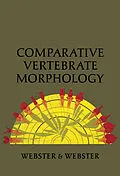
Comparative Vertebrate Morphology provides a comprehensive discussion of vertebrate morphology. The structure-function concept at the level of organs and organ systems is fundamental to an understanding of comparative evolutionary morphology. It is upon these three interrelated aspects-structure, function, and evolution- that that contents of this volume have been organized and presented. The book opens with a discussion of general concepts on vertebrate evolution. This is followed by separate chapters on vertebrate phylogeny, skeletal components, the cranial and postcranial skeleton, muscular tissues, muscular system, and development of the integument, nervous tissues, sense organs, nervous system structure, nervous pathways, and endocrines. Subsequent chapters deal with the digestive, respiratory, circulatory, excretory and water balance, and reproductive systems. This book was designed to meet the needs of a one-semester course for students who have already had an introductory course in biology. It is assumed that the lectures will be supplemented by a laboratory with its own laboratory manual. The organization of the text allows the instructor to coordinate the laboratory and lecture portions of the course.
Inhalt
Preface
1 How We Got Here: Intellectual Background
General Concepts of Vertebrate Evolution
Comparative Morphology and Vertebrate Evolution
Suggested Reading
2 How We Got Here: Vertebrate Phylogeny
Fishes
Earliest Fossil Vertebrates - Agnatha
First Fishes with True Jaws - Placodermi
Cartilaginous Fishes - Chondrichthyes
Bony Fishes - Osteichthyes
Transition from Water to Land
Amphibia
Reptilia
Development of Homeothermy
Mammalia
Aves
Spatial and Temporal Diversity
Embryological Development
Suggested Reading
3 Skeletal Components
Vertebrate Skeletal Tissues
Notochord
Cartilage
Bone
Joints
Suggested Reading
4 Cranial Skeleton
Cephalization
Embryologic Development of the Head Skeleton
The Neurocranium
The Splanchnocranium
The Dermatocranium
A Generalized Vertebrate Skull, Amia calva
The Bowfin Skull as a Functioning Unit
Diversity of Vertebrate Skull Organization
Agnatha
Placodermi
Chondrichthyes
Osteichthyes-Actinopterygii
Osteichthyes-Sarcopterygii
Amphibia
Reptilia
Aves
Mammalia
Suggested Reading
5 Postcranial Skeleton
Axial Skeleton: the Vertebral Column and Notochord
Vertebral Development
Diversity of Vertebral Structure
Regionalization of the Vertebral Column
Axial Skeleton: Ribs
Axial Skeleton: Sternum
Appendicular Skeleton
Extrinsic Skeleton - the Pectoral Girdle
Extrinsic Skeleton - the Pelvic Girdle
Intrinsic Skeleton - Unpaired Appendages
Intrinsic Skeleton - Paired Appendages
Adaptiveness of the Tetrapod Appendicular Skeleton
Suggested Reading
6 Muscular Tissues
Smooth Muscle
Cell Structure
Functional Characteristics
Skeletal Muscles
Cell Structure
Other Structural Features of Skeletal Muscle Cells
Types of Skeletal Muscle Fibers
Excitation of Skeletal Muscles
Striated Muscles as Organs
Cardiac Muscles
Suggested Reading
7 Muscular System
Ontogeny of Skeletal Muscles
Axial Muscles
Muscles of the Limbs (Appendicular Muscles)
Gill Arch Muscles (Branchiomeric)
Patterns of Later Muscular Differentiation
Determining Muscle Homologies and Phylogenies
Somatic Muscles: Axial
Extrinsic Ocular Muscles
Hypobranchial Muscles
Trunk Musculature
Somatic Muscles: Appendicular
Branchiomeric Muscles
Some Muscle Specializations
Suggested Reading
8 The Integument
Development of the Integument
Microscopic Structure
Epidermis
Dermis
How Thick is a Layer?
Integumentary Glands
Fishes
Amphibians
Reptiles
Birds
Mammals
Scales and Denticles
Placoid Denticles
Scales of Ostracoderms and Placoderms
Sarcopterygian Cosmoid Scales
Ganoid Scales
Cycloid and Ctenoid Scales
Amphibian Scales
Reptilian Scales
Scales in Birds and Mammals
Horns and Antlers
Digital Tips
Amphibians
Amniotes
Feathers
Plumage
Hair
Color
Coloration in Birds
The Integument as a Organ System
Suggested Reading
9 Nervous Tissues
Neurons
Morphology of the Neuron
Physiology of the Neuron
Myelin Sheath
The Synapse
Terminology
Exploring the Nervous System
Reflexes
Suggested Reading
10 Sense Organs
Fundamental Characteristics of Sense Organs
Cutaneous Receptors
Free Nerve Endings
Encapsulated Nerve Endings
Proprioceptors
Chemoreceptors
Olfactory Organs
The Vomeronasal Organ of Jacobson
Taste Organs
Photoreceptors
Lateral Eyes
Median Eyes
Ophidian Pit Organs
The Acousticolateralis Receptors
Embryonic Origin
The Hair Cell
The Lateral Line System
The Inner Ear
Fishes
Middle Ear
Auditory Inner Ear
Tetrapods
Details of Mammalian Cochlear Duct
Suggested Reading
11 Nervous System Structure
Development
Spinal Cord and Spinal Nerves
Mammals
Nonmammals
Cranial Nerves
Somatic Motor Nerves, Corresponding to Ventral Roots of Agnathan Spinal Nerves
Somatic Sensory, Visceral Sensory, and Visceral Motor Nerves, Corresponding to Agnathan Dorsal Roots
Special Sensory Nerves
Visceral Nervous System
Mammalian Autonomic System
Structure of the Brain
The Suprasegmental Apparatus
Suggested Reading
12 Nervous Pathways
Pathways of the Somatic Sensory System
Mammals
Nonmammalian Vertebrates
Auditory Pathways
Mammals
Nonmammals
Vestibular Pathways
Visual Pathways
Mammals
Birds
Reptiles, Amphibian, and Fishes
Olfactory Pathways
Mammals
Nonmammalian Vertebrates
Corticospinal System
Extrapyramidal Motor System
Mammals
Nonmammalian Extrapyramidal Systems
Cerebellar Pathways
Mammals
Nonmammals
Final Common Pathway
The Mammalian "Limbic Lobe"
Mammalian Neocortex
Suggested Reading
13 Endocrines
Pituitary Gland or Hypophysis
Structure
Hormones of the Pituitary
Thyroid Gland
Structure
Hormones of the Thyroid
Parathyroid Glands
Pancreatic Islets of Langerhans
Hormones of the Islets
Adrenal Glands and Tissues
Gastrointestinal Hormones
Minor and Less Well Understood Endocrines
Pineal
Thymus
Urophysis
Angiotensin
Reproductive Hormones
Suggested Reading
14 Digestive System
Selective Factors in Evolution
Development and General Structure
Oral Cavity
Tongue
Teeth
Development of Dentition<…