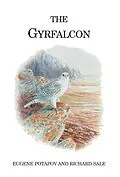
WINNER OF THE WILDLIFE SOCIETY'S 'BEST SCIENCE BOOK 2006' AWARD
This book is the first monograph on one of the most beautiful and admired birds in the world.
The Gyrfalcon is the world's largest and most powerful falcon - a truly awe-inspiring bird which inhabits the ferociously inhospitable Arctic taiga, from Greenland and Iceland right across Siberia and northern Canada. Its plumage varies from a dark mottled grey to pure white - the white birds in particular are coveted by birders and falconers.
Like other titles in the series, it covers all aspects of the species' biology, taxonomy, distribution, status and historical associations with mankind. The result is an exhaustively researched and enthrallingly readable biography of a spectacular bird, illustrated throughout with photographs and line drawings.
Autorentext
Raptor specialist Eugene Potapov and Arctic expert Richard Sale form a talented and experienced author team. Their first Poyser title, The Gyrfalcon (2005), was the winner of The Wildlife Society's 'Best Science Book 2006' award, while Sale's publication A Complete Guide to Arctic Wildlife (Christopher Helm, 2006) has sold strongly and received excellent reviews.
Zusammenfassung
WINNER OF THE WILDLIFE SOCIETY'S 'BEST SCIENCE BOOK 2006' AWARDThis book is the first monograph on one of the most beautiful and admired birds in the world. The Gyrfalcon is the world's largest and most powerful falcon - a truly awe-inspiring bird which inhabits the ferociously inhospitable Arctic taiga, from Greenland and Iceland right across Siberia and northern Canada. Its plumage varies from a dark mottled grey to pure white - the white birds in particular are coveted by birders and falconers. Like other titles in the series, it covers all aspects of the species' biology, taxonomy, distribution, status and historical associations with mankind. The result is an exhaustively researched and enthrallingly readable biography of a spectacular bird, illustrated throughout with photographs and line drawings.
Inhalt
Preface
1 Paleobiogeography
2 Identification and Colours
3 Distribution
4 Population
5 Habitat and Landscape Preferences
6 Food and Feeding Habits
7 Breeding Cycle
8 Dispersal, Seasonal Movements and Winter Distribution
9 Competitors, Commensals and Conspecifics
10 Man and Falcons
11 Threats and Conservation
Appendix: Scientific names of plants and animals mentioned in the text
Glossary
References