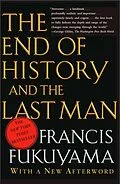
A landmark New York Times bestseller and one of the most influential works of political thought of the modern era.
First published in 1992, Francis Fukuyama's The End of History and the Last Man made a provocative argument: that liberal democracy might represent the culmination of humanity's long political evolution. In the decades since, that idea has been challenged, debated, and reconsidered as authoritarianism, nationalism, war, and political instability have continued to reshape the global order.
Ambitious, influential, and still fiercely debated, The End of History and the Last Man remains essential reading for anyone seeking to understand the forces shaping democracy and the future of political life. Now updated with a new afterword.
Autorentext
Francis Fukuyama is a Senior Fellow at the Freeman Spogli Institute for International Studies (FSI) at Stanford University, and Mosbacher DIrector of FSI's Center on Democracy, Development, and the Rule of Law. Dr. Fukuyama has written about questions concerning governance, democratization, and international political economy. His book The End of History and the Last Man has appeared in over twenty foreign editions. His most recent books are The Origins of Political Order: From Prehuman Times to the French Revolution, and Political Order and Political Decay: From the Industrial Revolution to the Globalization of Democracy.
Klappentext
Ever since its first publication in 1992, the New York Times bestselling The End of History and the Last Man has provoked controversy and debate. "Profoundly realistic and important...supremely timely and cogent...the first book to fully fathom the depth and range of the changes now sweeping through the world." ?The Washington Post Book World
Francis Fukuyama's prescient analysis of religious fundamentalism, politics, scientific progress, ethical codes, and war is as essential for a world fighting fundamentalist terrorists as it was for the end of the Cold War. Now updated with a new afterword, The End of History and the Last Man is a modern classic.