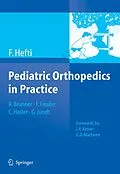
This second edition of the classic work uses definitions, topical quotations by famous people and amusing cartoons in its exhaustive coverage of pediatric orthopedics. Aimed at anyone with an interest in the field, from students to practitioners, it communicates the latest findings in pediatric orthopedics in a comprehensive and detailed manner. On the way it provides solutions to frequently asked questions in the field of orthopedics and pediatrics and highlights all aspects of diagnosis. It also gives precise instructions for therapy, and answers questions such as: should we simply let nature take care of the way children grow and develop? Or do we need splints, corsets, or even operations, for straightening what is crooked? This is how to make children's orthopedics fun - in both practice and theory.
Zusammenfassung
that is pushing the crooked tree trunk in the cover il- Children are »patients«, not »customers«, » lustration). This requires close cooperation with parents, they require »care«, not »management« « pediatricians, other therapists, orthopaedic technicians (G. A. Annas) and nursing personnel. The idea for this book originated from pediatricians who were frequently encountering patients with musculoskeletal problems and who, during a course in pediatric orthopaedics, expressed a wish for a book that would take into account the standpoint of the pediatrician, as well as those of the children and parents. It has since grown into a comprehensive volume. Not all readers will have so much to do with »crooked« children that they will want to read everything. But perhaps they might wish to refer to this book upon encountering a specific problem. There may also be those who are not directly involved in treatment, but who would probably like to know the various available options and the cor- sponding factors considered in their selection. For prac- cal purposes, this book also aims to stress the regional (rather than a systematic) subdivision of disorders. After all, a child does not come to the doctor's office saying »I'm suffering from a growth disorder« or »I have a congenital condition«. Rather he or she will say »my back hurts« or »I have a stabbing pain in my knee«.
Inhalt
General.- Basic principles.- Diseases and injuries by site.- Systematic aspects of musculoskeletal disorders.