Autorentext
Klappentext
George Berkeley
Klappentext
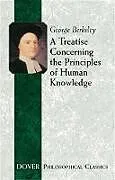
If a tree falls in the forest and no one is present to hear it, does it make a sound? It does not, according to George Berkeley. Originally published in 1710, this landmark of Western philosophy introduced a revolutionary concept: immaterialism, which asserts that to be is to perceive or be perceived.
An Irish clergyman who spent his entire philosophical career as a churchman, Berkeley linked his investigations to his religious interests. A Treatise Concerning the Principles of Human Knowledge opens with an assault on Locke's theory of abstract ideas and proceeds with arguments that sensible qualities exist only when perceived as ideas. Physical objects, he claims, are no more than collections of qualities, and these sensible objects, too, are merely ideas. Berkeley relates his position to the achievements of eighteenth-century science, and proclaims the compatibility of immaterialism with traditional religion.
The fullest expression of Berkeley's doctrine of immaterialism, this classic work influenced British philosophers from David Hume to Bertrand Russell and the other logical positivists. It is essential reading for all students of philosophy.
An Irish clergyman who spent his entire philosophical career as a churchman, Berkeley linked his investigations to his religious interests. A Treatise Concerning the Principles of Human Knowledge opens with an assault on Locke's theory of abstract ideas and proceeds with arguments that sensible qualities exist only when perceived as ideas. Physical objects, he claims, are no more than collections of qualities, and these sensible objects, too, are merely ideas. Berkeley relates his position to the achievements of eighteenth-century science, and proclaims the compatibility of immaterialism with traditional religion.
The fullest expression of Berkeley's doctrine of immaterialism, this classic work influenced British philosophers from David Hume to Bertrand Russell and the other logical positivists. It is essential reading for all students of philosophy.
Titel
A Treatise Concerning the Principles of Human Knowledge
Autor
Editor
EAN
0800759149339
ISBN
978-0-486-14933-2
Format
E-Book (epub)
Hersteller
Herausgeber
Veröffentlichung
03.08.2012
Digitaler Kopierschutz
Adobe-DRM
Dateigrösse
0.55 MB
Anzahl Seiten
144
Jahr
2012
Untertitel
Englisch
Unerwartete Verzögerung
Ups, ein Fehler ist aufgetreten. Bitte versuchen Sie es später noch einmal.