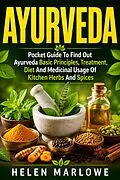
Ayurveda: Pocket Guide to Basic Principles, Treatment, Diet, and Medicinal Usage of Kitchen Herbs and Spices provides a structured introduction to the foundations of Ayurvedic medicine and its practical applications in daily life. The book outlines the historical origins of Ayurveda, its philosophical background, and its core concepts, including the three doshas-Vata, Pitta, and Kapha-and the five elements. It explains how constitutional types influence physical and mental characteristics, and how balance is maintained through lifestyle, nutrition, and traditional diagnostic methods such as pulse, tongue, nail, and eye examination. The guide is intended for readers interested in holistic health, natural wellness, and traditional systems of medicine, including beginners seeking a clear overview as well as individuals exploring complementary approaches to well-being. It presents information in an accessible and descriptive format, covering topics such as Ayurvedic perspectives on common conditions including diabetes and asthma, Panchakarma purification practices, Rasayana therapies, yoga, breathing techniques, and dietary regulation based on body type and seasonal considerations. A dedicated section examines the medicinal properties of common kitchen herbs and spices-such as ginger, turmeric, fenugreek, fennel, cardamom, coriander, and black pepper-within the Ayurvedic framework. The book emphasizes the relationship between digestion, metabolism, immunity, and preventive care, offering practical insights into food preparation, nutrient intake principles, and the integration of herbs into everyday routines. Designed as a concise reference, this pocket guide combines historical context, theoretical foundations, and practical guidance for readers seeking an introduction to Ayurveda and natural health practices.