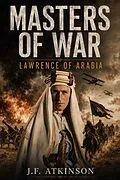
Thomas Edward Lawrence "Lawrence of Arabia" stands as one of the twentieth century's most enigmatic and influential military figures. Scholar, archaeologist, guerrilla commander, and tortured genius, Lawrence transformed the nature of modern warfare through his leadership of the Arab Revolt against the Ottoman Empire during World War I. This comprehensive military biography examines Lawrence not as a romantic legend but as a Master of War whose innovations in irregular warfare continue to shape military doctrine a century later.
From his unconventional Oxford education and archaeological apprenticeship in Ottoman Syria to his revolutionary campaigns across the Arabian desert, this volume traces Lawrence's evolution from obscure intelligence officer to architect of guerrilla warfare doctrine. His capture of Aqaba through a 600-mile march across "impassable" desert, his systematic railway destruction campaign that tied down tens of thousands of Ottoman troops, and his coordination of irregular Arab forces with British conventional armies demonstrated operational art of the highest order.
But Lawrence's story transcends tactical brilliance. This work examines the full complexity of his achievement: the cultural intelligence that enabled him to lead forces across profound cultural divides, the political sophistication required to maintain fragile tribal coalitions, the moral burden of deceptions necessary for coalition warfare, and the psychological trauma that would haunt him until death. His experience illuminates enduring questions about the relationship between military effectiveness and political objectives, between tactical success and strategic outcomes, between means and ends in warfare.
The book provides rigorous military analysis using professional staff criteria to evaluate Lawrence's major operations, the Wejh campaign, the Aqaba masterpiece, the railway warfare that created a new model of economic warfare, and the final drive to Damascus. It examines his theoretical contributions through comparison with other great guerrilla leaders, Mao, Giap, Guevara and traces his influence on modern special operations forces and counterinsurgency doctrine. It honestly confronts the political betrayal that followed military victory and Lawrence's post-war retreat into obscurity and psychological torment.
The final chapters extract lessons applicable to contemporary military challenges: the operational necessity of cultural knowledge, the power of psychological and economic warfare, the principles of working "by, with, and through" indigenous forces, the integration of intelligence and operations, and the inseparability of political and military dimensions in complex environments. Lawrence's example remains profoundly relevant to commanders facing irregular warfare, partnered operations, and asymmetric challenges where conventional military power alone proves insufficient.
This volume presents Lawrence completely, the brilliant innovator and the troubled man, the tactical genius and the moral failure, the military leader whose achievements were inseparable from profound personal and political tragedy. It demonstrates why he deserves his place among the Masters of War, not despite his complexity and contradictions, but because his example illuminates fundamental truths about leadership, warfare, and the human costs of military effectiveness in the most challenging environments.