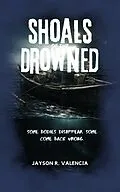
In a fishing village on the coast of Palawan, the sea has always been dangerous. It feeds families, takes lives without warning, and keeps its dead when it wants to. Tomas Alon has spent his whole life learning the difference between ordinary risk and the kind of danger a man can survive. Then his younger brother Daniel is taken from their banca during a staged maritime boarding, shoved into black water under searchlights that were never meant to save him. By morning, the official story is already written: rough seas, unsafe movement, one civilian lost in an unfortunate accident. Tomas is told to sign the paper and let the sea take the blame.
But the water does not behave like an accomplice for long.
When a mutilated body washes ashore bearing wounds no propeller, reef, or current can explain, Tomas begins to understand that Daniel's disappearance is only the first rupture in something larger. Boats return with damage below the waterline. Men whisper about movement along the hull at night. What should be dismissed as panic or grief keeps leaving physical proof behind. At the same time, Lieutenant Dasha Salisipan starts finding something equally monstrous on land: altered reports, buried vouchers, and orders to turn beatings, seizures, and disappearances into administrative language soft enough to survive public scrutiny. Behind the lies stands a machinery of coercion tied to maritime operations, political fixers, and men who know exactly how to make violence look procedural.
As Tomas is pulled deeper into the wake of Daniel's killing, the hunt for truth drives him out beyond the shoreline and onto a vessel where the boundaries between predator and prey have already begun to collapse. The men aboard are not clean victims, not clean villains, and not safe from what moves through the ship's wet compartments, maintenance shafts, and dark lower passages. Something has learned the routes under the planks. Something ancient, physical, and ravenous has been feeding in the same waters now being controlled through intimidation, staged inspections, and falsified rescue theater. And once it is inside the hull, nowhere on the vessel is truly sealed.
The Shoals of the Drowned is a maritime horror novel of grief, survival, and official lies?a story of working boats, black water, and the terrible intimacy of being trapped between a human system built to erase the truth and a creature that does not need witnesses to kill. Set against the pressures of contested seas and coastal poverty, it blends creature horror, shipboard suspense, and political dread into a relentless descent where every report can be rewritten, every search can be staged, and every patch of water may already be occupied. For Tomas, the fight begins with his brother's disappearance. What waits beyond it is older, hungrier, and far harder to bury.
Autorentext
Jayson R. Valencia writes folk horror, supernatural survival fiction, and dark speculative stories rooted in the landscapes, beliefs, monsters, and contradictions of the Philippines and Southeast Asia.
His fiction often follows ordinary people confronting old legends in modern places: from provincial roads and isolated communities to cities, military zones, churches, and homes where something ancient has been waiting. His stories combine folklore, suspense, survival, dark humor, friendship, family, and the uneasy boundary between faith and fear.