Autorentext
Klappentext
Inhalt
John Dewey
Klappentext
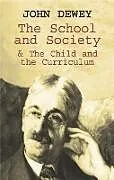
One of the most influential forces in the shaping of American education, the famed philosopher and psychologist John Dewey (1859?1952) believed in "viewing the education of the child in the light of the principles of mental activity and processes of growth made know by modern psychology." As the administrator of the University of Chicago's laboratory school ? which he established in 1896 and which was one of the first such schools in the United States ? Dewey came to the realization that learning was a process starting from uncertainty and growing from the impulse which must begin with experience, and the curriculum must be made to relate to the students' interests.
The two books in this volume ? both short, but extremely influential ? grew out of Dewey's hands-on experience with the laboratory school and represent the earliest authoritative statement of his revolutionary emphasis on education as an experimental, child-centered process, In The School and Society, he declares that we must "make each one of our schools an embryonic community life, active with types of occupations that reflect the life of the larger society and permeated with the spirit of art, history, and science." In The Child and the Curriculum, he stresses the importance of the curriculum as a means of determining the environment of the child, and allowing the teacher to guide children in asserting themselves, exercising their capacities, and fulfilling the destinies of their own nature.
Gathered in this single convenient volume, these thought-provoking contributions by one of America's greatest thinkers in the field of pedagogy will be immense interest to educators, psychologists, parents, and anyone interested in the psychology and philosophy of childhood education.
The two books in this volume ? both short, but extremely influential ? grew out of Dewey's hands-on experience with the laboratory school and represent the earliest authoritative statement of his revolutionary emphasis on education as an experimental, child-centered process, In The School and Society, he declares that we must "make each one of our schools an embryonic community life, active with types of occupations that reflect the life of the larger society and permeated with the spirit of art, history, and science." In The Child and the Curriculum, he stresses the importance of the curriculum as a means of determining the environment of the child, and allowing the teacher to guide children in asserting themselves, exercising their capacities, and fulfilling the destinies of their own nature.
Gathered in this single convenient volume, these thought-provoking contributions by one of America's greatest thinkers in the field of pedagogy will be immense interest to educators, psychologists, parents, and anyone interested in the psychology and philosophy of childhood education.
Inhalt
THE SCHOOL AND SOCIETY
I. The School and Social Progress
II. The School and the Life of the Child
III. Waste in Education
IV. The Psychology of Elementary Education
V. Froebel's Educational Principles
VI. The Psychology of Occupations
VII. The Development of Attention
VIII. The Aim of History in Elementary Education
List of Illustrations
Drawing of a Cave and Trees
Drawing of a Forest
Drawing of Hands Spinning
Drawing of a Girl Spinning
Chart I
Chart II
Chart III
Chart IV
THE CHILD AND THE CURRICULUM
Titel
The School and Society & The Child and the Curriculum
Autor
EAN
0800759122103
ISBN
978-0-486-12210-6
Format
ePUB
Hersteller
Herausgeber
Veröffentlichung
07.03.2012
Digitaler Kopierschutz
Adobe-DRM
Dateigrösse
1.41 MB
Anzahl Seiten
128
Jahr
2012
Untertitel
Englisch
Unerwartete Verzögerung
Ups, ein Fehler ist aufgetreten. Bitte versuchen Sie es später noch einmal.