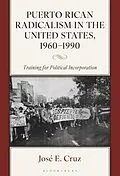
This book traces the trajectory of Puerto Rican radicalism in the United States from 1960 to 1990 and suggests that radicalism was a school for the conventional politics of radicals-cum-progressives. Radicalism was an approach to politics focused on the achievement of independence for Puerto Rico and socialism in Puerto Rico and the US.
Puerto Rican Radicalism in the United States examines the radical movement as a whole through an extensive examination of primary and secondary sources. It challenges the view that Puerto Rican radical politics provided the foundation for conventional politics within the broader community. This review avoids the selective blindness and reification of analyses that attempt to redeem the movement by treating discursive contributions as practical accomplishments and that celebrate radicalism simply on the merits of its normative propositions. The book examines those normative propositions in relation to the practice of the radical movement to provide an objective account of its development. It also offers an assessment of the Young Lords that is different from extant evaluations. Puerto Rican Radicalism in the United States looks at radicalism in its relationship with Puerto Rican conventional politics and in the context of North American radicalism. It highlights the European background of the movement and proposes a new conceptualization of its connection to Puerto Rico. The book examines Puerto Rican radicalism to glean insights that may be useful to citizens seeking to bridge the gap between democratic promise and performance.
Autorentext
José E. Cruz is a professor in the Political Science Department at University at Albany, State University of New York . He is the author of Liberalism and Identity Politics (2019) and Puerto Rican Identity (2017).