Modern urban combat is not fought on a flat map. It is fought across streets, basements, tunnels, stairwells, rooftops, windows, courtyards, rubble, and the contested airspace immediately above the fight. The city compresses distance, fragments command and control, degrades communications, multiplies concealed threats, and forces decisions downward onto the small units actually entering buildings, crossing intersections, clearing rooms, and holding ground under pressure.
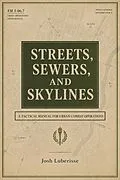
Streets, Sewers, and Skylines is a tactical manual for that fight. Written as the companion volume to The Four-Floor War, this work moves from doctrine to execution. Where The Four-Floor War establishes the layered model of the modern urban battlespace, Streets, Sewers, and Skylines asks how the squad, team, platoon leader, and tactical practitioner fight inside it. Its focus is the small unit: the echelon that bears the direct burden of urban combat when higher formations can enable, support, and direct the fight, but cannot clear the stairwell, secure the rooftop, enter the tunnel, or make the next decision under degraded communications.
The book is organized around the three tactical planes that define the urban fight. Streets addresses surface movement, intersections, open spaces, rubble, mounted-dismounted integration, and the clearance of buildings from the outside in. Sewers examines the subterranean plane: basements, utility tunnels, sewer systems, purpose-built networks, the atmosphere problem, tunnel movement, denial, and casualty extraction below ground. Skylines explores the vertical fight: upper floors, rooftops, cross-structure movement, sniper and counter-sniper problems, and the low-altitude drone environment that now shapes every exposed movement and every open window.
The manual also addresses the problems that cut across all three planes: transitions between surface, subterranean, and vertical terrain; the integrated drone threat; command, control, and communications under urban conditions; and the planning and rehearsal disciplines required before a unit commits itself to terrain that will punish every assumption it failed to test.
This is not a broad policy argument, a history of urban warfare, or a technology survey. It is a tactical work concerned with the recurring problems that small units face in cities: how to read the block before entering it, what imagery and maps will not reveal, what construction type does to fire and movement, how civilian density alters every decision, what the squad owns organically, what it must request, and how leaders manage the cognitive load of making lethal decisions under fragmentary information and immediate consequence.
Urban combat rewards preparation, discipline, and structure. It punishes improvisation masquerading as initiative. Streets, Sewers, and Skylines provides a framework for thinking through the urban fight before the unit is inside it, before communications fail, before the route collapses, before the casualty has to move through terrain that has not yet been secured.
A serious tactical companion to The Four-Floor War, this manual is written for military professionals, trainers, small-unit leaders, tactical educators, and readers seeking a disciplined framework for understanding how modern forces fight, survive, and adapt inside the city.
Autorentext
Josh Luberisse is an entrepreneur, author, and strategic thinker with deep expertise in geopolitics, military strategy, and cybersecurity. With a myriad of authoritative books to his credit on these subjects, he is undeniably a luminary in the domain. Not just an author, Josh is also the charismatic host of "Disrupting Defense," a groundbreaking podcast that explores the intersection of technology and national security. Each episode unravel the intricacies of how cutting-edge innovations from Silicon Valley are not just enhancing military capabilities but are also transforming them. By tuning in you can stay at the forefront of defense innovation and discover how technology is not just supporting but leading the charge in modern military operations.
As an entrepreneur, Josh has founded several startup companies, including one specializing in AI research and another providing top-tier cybersecurity consulting services. His hands-on experience in these fields lends authenticity and depth to his writing and public speaking engagements.
Widely sought after as a speaker and consultant, Josh's contributions to the technology and defense sectors are immeasurable. His passion for knowledge and innovation is not just a professional pursuit but a personal mission to inspire and educate, leaving a lasting impact on the world.
For those seeking practical, actionable insights into the ever-evolving landscape of technology and defense, Josh's extensive collection of manuscripts and his engaging community of readers and followers offer a wealth of knowledge and inspiration.