Most meetings do not fail because the people in them are difficult. They fail because no one defined what the meeting was supposed to decide before it started.
A meeting without a defined outcome generates what comes next: a follow-up to review what was agreed, a second thread to clarify who owns what, and a growing backlog of conversations that should have closed in round one. The calendar debt compounds before anyone notices.
Do you leave meetings unsure what was decided or who is supposed to do anything about it? Have you ever sat through a one-hour discussion that ended with someone suggesting a follow-up call to finalize what just happened? Do you want a complete system - agenda, facilitation, closure, and follow-up - that ends every meeting with a clear decision and no open loops?
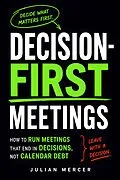
Decision-First Meetings is a scenario-by-scenario handbook for team leads and contributors who run or attend meetings that regularly end without clear outcomes. Every chapter covers one stage of the meeting system - from whether to hold it at all, through the agenda, the room, and the follow-up - with exact language and scripts for each.
Here's just a fraction of what you'll discover inside:
The Outcome Sentence: One sentence written before the invite goes out - the meeting's single defined result, which determines the agenda, the attendee list, and when the meeting is done The Cancellation Test: A three-question audit for any recurring meeting - whether it has earned its calendar slot or just grown there by default Verbs, Not Nouns: How to rewrite every agenda item as a decision outcome - so each item has a defined finish line and the meeting ends when those lines are crossed, not when time runs out Owner-Action-Date: The closure format that converts meeting decisions into accountability - who does what, by when, in one recorded line per action item The Five-Line Recap: A post-meeting follow-up format that replaces transcript notes with five scannable lines - decision, action items, open questions, tradeoffs, and next steps - ready to send in minutes The Parking Lot (Used Properly): How to redirect a tangent without dismissing it - the facilitation tool most people use as a quiet dead end, with exact language that makes it a real commitment Scripts for Every Meeting Moment: Agenda language, redirect phrases, decision-closing prompts, cancellation messages, and follow-up notes - ready the day you open the book
Whether you run one meeting a week or twelve, and whether the problem is unfocused agendas, indecision in the room, or follow-ups that fade without action, the system inside this book is ready to use from the first chapter.
Get your copy now and start running meetings that end with real decisions today.