'Have little thought of self and as few desires as possible'
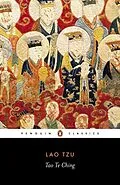
Whether or not Lao Tzu was a historical figure is uncertain, but the wisdom gathered under his name in the fourth century BC is central to the understanding and practice of Taoism. One of the three great religions of China, Taoism is based upon a concept of the Tao, or Way, as the universal power through which all life flows. The Tao Te Ching offers a practical model by which both the individual and society can embody this belief, encouraging modesty and self-restraint as the true path to a harmonious and balanced existence.
Translated with an Introduction by D. C. Lau
Autorentext
Lao Tzu is a Chinese philosopher and founder of the Taoist religion in China. His name means 'Old Master'. He worked as a librarian at the court of Chou. When the kingdom showed signs of decay, Lao Tzu left and was never heard of again. Tao Te Chingis said to be his the principles of his philosophy.
D. C. Lau read Chinese at the University of Hong Kong and in 1946 he went to Glasgow where he read philosophy.