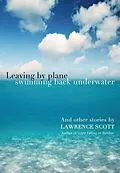
Lawrence Scott is a prize-winning Caribbean novelist and short-story writer who was born on a sugar estate in Trinidad. He has been short-listed for Commonwealth Writers' prizes three times, twice nominated for the International Impac Dublin Literary Award, long-listed for the Whitebread Prize and the Booker Prize and was winner of the Tom-Gallon Short-Story Award. His latest novel is Light Falling on Bamboo about the 19th century painter Jean Michel Cazabon. He has travelled extensively in the Caribbean and North and South America where he has lectured, read and talked about his work. Academic research has included the Golconda Research/Writing Project, a "public history" project which involved the recording and transcribing of oral histories from "The Sugar" in Trinidad. Leaving by Plane Swimming Back Underwater is his second short-story collection. He lives and work in both London and Port of Spain, Trinidad.
Autorentext
Lawrence Scott is a prize-winning novelist and short story writer from Trinidad & Tobago. He was recently inducted as a Fellow of the Royal Society of Literature, 2019. He was awarded a Lifetime Literary Award in 2012 by the National Library of Trinidad & Tobago for his significant contribution to the Literature of Trinidad & Tobago. His first novel, Witchbroom (1992) was read as a BBC Book at Bedtime, and republished by Papillote Press (2017). His most recent book, the collection of stories, Leaving by Plane Swimming Back Underwater, 2015, was longlisted for The Edge Hill Short Story Prize 2016, the Grand Prix Littéraire de l'Association des Ecrivains de la Caraïbe from the Congrès des Ecrivains de la Caraïbe, Guadeloupe, 2017 and the Frank O'Connor Short Story Award, 2015. His other novels are Light Falling on Bamboo (2012), Night Calpyso (2004) and Aelred's Sin (1998). He lives in London and Trinidad.
Klappentext
This daring new collection of short stories from an awardwinning writer explores a Caribbean world of yearnings and memory, of escape and return underpinned by the disturbing tensions wrought by religion, race, sexuality and crime. Sensuous and evocative, Scott's prose has a glorious lightness of touch and tone that exhilarates and illuminates.