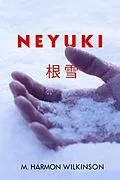
Professor Will Grames's colleague has gone missing. Only Will knows where, because he hid the body.
Will brought his young family along on a three-year adventure to the Japanese Alps, but now he's panicked that he'll be blamed for the man's death-and spend the rest of his life in a Japanese prison. Will's desperate plan: move the body into town the next night to obscure the evidence. In the meantime, he hides it in the field behind the little international university, a spot where the pampas grass is tall. But Will wakes the next morning to heavy snow. By the time he goes to retrieve the corpse, it's over three feet deep.
Yet a much more chilling secret hides in this school tucked away in an idyllic mountain valley. Will's actions soon trap him in a game of cat and mouse with someone who'll do anything, including murder, to keep that secret concealed. The killer needs a scapegoat and is frantically cementing the last pieces of a plot to convict Will. Consumedby guilt and coming apart at the seams, Will must race to not only deflect the police investigation from himself, but find the real killer. The police, baffled by what they are sure is a murder but with no corpse, are nevertheless drawing inexorably closer to the truth.
Neyuki explores themes of guilt and innocence through its cast of characters. In them, we see the power of conscience over those who are not too jaded to feel it.
Autorentext
M. Harmon Wilkinson worked in Japan for twenty-five years as a business school professor, long enough that Japan became another home. Still, he is aware that he never perfectly comprehended the culture, and is grateful for the grace he was shown as a transplant. A sense of respect, fascination, and occasional bewilderment permeates his novels, which examine what can happen when life for a foreigner veers off the rails, or in the rarest of cases, becomes actually dangerous. His first novel, Under Shoko's Bed, was published in 2021. Neyuki is his second novel. Harmon is married, with three grown children and seven grandchildren, all of whom live in America. "They were too far away," he laments, "but now Japan is. I will forever be pulled both east and west."