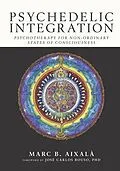
Psychedelic Integration: Psychotherapy for Non-Ordinary States of Consciousness is a trailblazing guidebook for anyone interested in psychedelic-assisted therapy and integration.
When psychologist and psychotherapist Marc B. Aixalá began fielding questions from people around the world seeking help integrating their own psychedelic experiences, he couldn't find a singular source of collected research and support. What began as an attempt to help others became Psychedelic Integration, a work that traces the evolution of psychedelic-assisted therapy and integration research from the 1960s to the present moment, explains therapeutic techniques and outlines a clinician's real-world observations on the deep work of healing.
Written for practitioners and the generally curious, this book offers 11 metaphors for understanding integration and concisely explains the seven dimensions of integration, which Aixalá sees as part of a process inextricably linked to preparation and the psychedelic session experience.
Grounded in the idea that integration work serves two main objectives: maximizing the benefits of a psychedelic experience and dealing with adverse effects, Aixalá maintains that understanding why an individual seeks integration support can inform therapeutic techniques. Psychedelic Integration outlines foundational practices like rest and nutrition, spiritual approaches including water rituals and tarot, embodied techniques of dance and singing, and frameworks including Holotropic Breathwork, Gestalt therapy and integration circles.
The author acknowledges that psychedelic experiences can be difficult and even traumatic, and he confronts that reality with compassion. In this book, Aixalá shares stories and artwork created by some of his patients as they progressed through their own integration journeys.
Psychedelic Integration is an essential companion for practitioners, their patients, and those seeking integration work not as a solution but as a tool for self and collective discovery.
Autorentext
Marc Aixalà is an engineer, psychologist, psychotherapist and certified Holotropic Breathwork facilitator, specialized in supporting people who face challenging experiences with expanded states of consciousness. Over the last 5 years, he has supported hundreds of people through the ICEERS Integration & Support Service and he has worked for KosmiCare psychedelic crisis intervention since 2010. He has been trained in the therapeutic use of Non Ordinary States of Consciousness as well as in MDMA assisted-psychotherapy for PTSD by MAPS and the use of psilocybin for treatment-resistant depression, Marc is now working as a therapist in a clinical trial with psilocybin in Sant Joan de Déu Hospital in Barcelona where he also mentors other psychedelic therapists. He has experience as a Team Leader and Trainer in emergency psychological assistance for people going through difficult psychedelic experiences at Boom Festival (Kosmicare 2010-2016). Marc collaborates with ICEERS (International Center for Ethnobotanical Education Research and Service) by offering integration psychotherapy sessions for people in challenging situations after psychedelic experiences, developing theoretical models of intervention and training and supervising therapists. He works as a psychologist in his private practice in Barcelona and offers trainings, lectures and talks related to psychedelic psychotherapy and integration.
Klappentext
Psychedelic Integration explores the young and still underdeveloped field of integration, tracing the history of psychedelic therapy trials in the sixties to the present moment, where integration may soon become common parlance in psychotherapy. This work describes how to maximize psychedelic integration, as well as the deep therapeutic work of moving through adverse reactions. Aixalà undertakes the great challenge of transforming multifaceted psychedelic healing, which can often feel so ineffable, into an intelligible guide for the curious reader and practicing therapist alike. Braiding poetic metaphors with case studies and a multitude of spiritual traditions, this book situates the author's humble and compassionate approach to therapy within a flourishing field. The work acknowledges that these models continue to evolve as they are written: the science and artistry of understanding psychedelic integration is and has always been a collective journey.