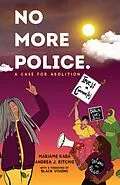
An instant national best seller A persuasive primer on police abolition from two veteran organizers
?One of the world's most prominent advocates, organizers and political educators of the [abolitionist] framework.? ?NBCNews.com on Mariame Kaba
In this powerful call to action, New York Times bestselling author Mariame Kaba and attorney and organizer Andrea J. Ritchie detail why policing doesn't stop violence, instead perpetuating widespread harm; outline the many failures of contemporary police reforms; and explore demands to defund police, divest from policing, and invest in community resources to create greater safety through a Black feminist lens.
Centering survivors of state, interpersonal, and community-based violence, and highlighting uprisings, campaigns, and community-based projects, No More Police makes a compelling case for a world where the tools required to prevent, interrupt, and transform violence in all its forms are abundant. Part handbook, part road map, No More Police calls on us to turn away from systems that perpetrate violence in the name of ending it toward a world where violence is the exception, and safe, well-resourced and thriving communities are the rule.
Autorentext
Mariame Kaba is known as one of the leading prison and police abolitionists of our time. She is the founder and director of Project NIA and the co-founder of Interrupting Criminalization, with Andrea Ritchie. She is the author of the New York Times bestselling We Do This Til We Free Us and lives in New York City.
Klappentext
The authoritative primer on police abolition by two celebrated, veteran movement leaders
In this provocative call to action, New York Times bestselling author Mariame Kaba and fellow abolitionist Andrea Ritchie detail why we should get rid of police and how we can create true community safety in their stead. They explore the many ways police fail to prevent or solve crime, instead causing harm themselves; demands to defund the police, a key strategy advanced by modern police abolitionists; and the many failures of contemporary police reforms. Kaba and Ritchie are themselves personally engaged in movements to end police, prison, and gender-based violence, and it is from this perch that they illuminate the lessons of the past two decades-of organizing toward a world without policing.
Centering survivors of state, interpersonal, and community-based violence, and highlighting uprisings, hyperlocal campaigns, and community-based projects, No More Police makes a compelling case for a world where the tools required to prevent, interrupt, and transform conditions fueling violence in all its forms are plenty. Part activist handbook, part movement history, No More Police calls on us to turn away from systems that perpetrate violence in the name of ending it, toward a world where violence is the exception and safe, abundant, and thriving communities are the rule.