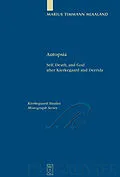
Seit ihrer Gründung im Jahr 1997 gilt die Reihe Kierkegaard Studies Monograph Series (KSMS) als maßgebendes Forum für herausragende Monographien aus dem gesamten Bereich der Kierkegaard-Forschung. Sie bietet Raum für die verschiedenen Forschungstraditionen zu Kierkegaard, die solchermaßen in einen konstruktiven Dialog treten. Kierkegaard Studies Monograph Series wird im Auftrag des Søren Kierkegaard Forschungszentrums (Universität Kopenhagen) herausgegeben.
Potential authors should consult the Submission guidelines.
All submissions will be blindly refereed by established scholars in the field. Only high-quality manuscripts will be accepted for publication. Potential authors should be prepared to make changes to their texts based on the comments received by the referees.
Autorentext
Marius Timmann Mjaaland, University of Oslo, Norway.
Klappentext
There are certain things that can be explained and certain things that cannot be explained. This book is about the latter. It is a book about death: how death interrupts and influences the reflection on the self. It is a book about God: a detailed and critical discussion on how Kierkegaard and Derrida apply the concept of God in their philosophical reflections.
The most ground-breaking analysis concerns the famous passage on the self (A.A) in The Sickness unto Death, where the author combines logical, rhetorical and dialectical means to establish a new perspective on Kierkegaard's thinking in general. The Cartesian doubt then constitutes a common trait for his detailed and rigorous analysis of Derrida and Kierkegaard on death, madness, faith, and rationality - showing how they both seek to break up the Hegelian Aufhebung from within, but still remain dependent on Hegel.
After Kierkegaard and Derrida, the certainty and total uncertainty of death - and of God as infinite other - gives the self a basic, though non-foundational, responsibility. The significance of this responsibility, of this other, of this death, requires sustained and thorough consideration. Where others mark a conclusion, this book therefore marks a point of departure: reflecting on oneself at the graveside of a dead man - thus introducing an Autopsia.
Zusammenfassung
There are certain things that can be explained and certain things that cannot be explained. This book is about the latter. It is a book about death: how death interrupts and influences the reflection on the self. It is a book about God: a detailed and critical discussion on how Kierkegaard and Derrida apply the concept of God in their philosophical reflections.
The most ground-breaking analysis concerns the famous passage on the self (A.A) in The Sickness unto Death, where the author combines logical, rhetorical and dialectical means to establish a new perspective on Kierkegaard's thinking in general. The Cartesian doubt then constitutes a common trait for his detailed and rigorous analysis of Derrida and Kierkegaard on death, madness, faith, and rationality showing how they both seek to break up the Hegelian Aufhebung from within, but still remain dependent on Hegel.
After Kierkegaard and Derrida, the certainty and total uncertainty of death and of God as infinite other gives the self a basic, though non-foundational, responsibility. The significance of this responsibility, of this other, of this death, requires sustained and thorough consideration. Where others mark a conclusion, this book therefore marks a point of departure: reflecting on oneself at the graveside of a dead man thus introducing an Autopsia.