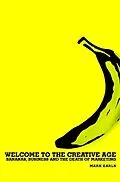
This book chronicles the dawn of the age of creativity in business, when new ideas and practices based on creativity will drastically change the way we do business. Starting with an overview of the age of marketing, the book winds its way through the past and the present to show us the future of business, backed up with insights from sociology and psychology.
Autorentext
MARK EARLS is Executive Group Planning Director at Ogilvy London - the UK's largest communications group. Prior to this, he worked at St. Luke's and a number of other London Ad agencies.
Mark is a frequent public speaker and has presented papers on his field of expertise around the world and judged a number of awards competitions. He edited the 1999 APG Creative Planning Awards case studies. He has been vice chair of the UK Account Planning Group and sat on the DTI Foresight Panel for Information, Technology and Communication.
Andrew Jaffe, chair of the US Clio Awards described to Mark as 'one of the London Advertising scene's foremost contrarians'.
Mark lives in North London but dreams of tight lines, off-drives and sunnier climes.
Klappentext
The rules and principles that have governed business for half a century are dead; what matters now, more than anything else, is creativity and ideas. In a thought-provoking look at the death of 'old' marketing, Mark Earls explores this sea change and shows how the new philosophy can be used to solve traditional marketing problems. He also provides detailed guidance for building an organization for which employees will choose to work - one within which creativity and ideas can flourish.
'This is the book Naomi Klein should have written. Mark Earls affectionately dissects the madness of modern marketing but at the same time understands why it really matters.' Dominic Mills, Editorial Director, Campaign Magazine
'Mark tears up a lot of what we are secure and familiar with (fundamental notions such as "brand" and "consumer-orientation", for instance), and, while giving us some of the new building blocks, he asks as many questions about the way forward without these familiar handrails, as he offers answers.' From the Foreword by Adam Morgan, Director of EatBigFish and author of best-selling Eating the Big Fish
'If the only thing you do is throw out your mission statement and grasp hold of a "purpose-idea" you will have a great return on your investment in Mark Earls' book.' Kevin Thomson, author of best-selling Emotional Capital and President of MCA Communicate
'Anyone who has ever challenged the shibboleths and practices of late twentieth century Marketing - especially the holy grail of "consumer insight" self-servingly invented by the Market Research industry - should read Mark Earls' comprehensive and tightly argued critique. Not only does it give us a rationale for not doing it like that any more (3 cheers!) but it also offers a passionate book full of creative ways to do it differently and more productively (300 cheers!).' Virginia Valentine, author, and Founder of Semiotic Solutions
'There are many who will doubtless want to see Mark Earls burned at the nearest stake for suggesting that marketing is not the all-seeing, all-healing deity in which they believe. Enjoy your martyrdom, Mark. Truth is on your side.' Jon Steel, author of best-selling Truth, Lies & Advertising - The Art of Account Planning
Inhalt
Foreword by Adam Morgan vii
Acknowledgements xi
Introduction: Bananas at Dawn 1
The 'added-value' banana 1
What's it all about, Alfie? 3
Marketing hilarity 4
Resistance is futile 7
The death of marketing as an organizational principle 8
The War for Talent and how to win it 9
The Creative Age as a new organizing principle 9
Too ambitious by half? 10
Talking to the preacher man 11
How to use this book 12
Structure 12
Creative Age heroes 13
And dear reader ... 14
1: Creativity Is Our Inheritance 15
The value of creativity 18
The man who knew too much 19
Creativity sees what isn't (yet) 20
Creativity is our greatest inheritance 21
Creativity in the public services 22
But I'm not very creative ... 23
The creative individual 25
The creative personality 27
What are we to make of the 'facts' of creativity? 29
Memories of the future 29
Team creativity = creativity to the power of N 30
Working together creatively 31
Leaving your agenda at the door 32
Diversity rules 33
Impro madness 34
Be kind to your fellow creators 35
Enjoy the journey, not the destination 35
Conclusions 37
Some questions 37
2: The Glorious Revolution 39
Looking forward and looking back 41
Change is a snowball made by many hands 42
Like frogs in a pot of water 43
The problem of history 44
The fertile ground 45
The Marketing Revolution and the doughboy 47
Something to believe in 48
Changing the world 49
The rise and rise of the brand 51
The final frontier? 55
What had happened? 55
Conclusions 56
Some questions 56
3: Tsunami 57
You've never had it so good 59
Tides of change 60
R-E-S-P-E-C-T 68
DIY careers 72
The importance of people 75
Tsunami and after 75
Some questions 76
4: Who and How We Are 77
It's over 79
I am not who you think I am 80
The brain in action 83
Engaging the disengaged mind 84
Emotions and decisions 85
Humans as herd animals 87
The end of the individual? 92
Conclusions 93
Some questions 94
5: Ideas, Ideas, Ideas 95
Ideas and attention dollars 98
Home is here 101
This is the sound of the suburbs 102
'Don't be so English' 104
Ideas and B2B 105
Ideas and microchips 107
Key characteristics of the Creative Age Idea 109
Conclusions 112
Some questions 113
6: All that You Can't Leave Behind (but must) 115
Learning to let go 117
Tea with Andrew Ehrenberg 120
Asking silly questions 122
Shaky foundations and empty promises 123
More shaky foundations 125
Opinions aren't much use 127
So where does this leave market research? 128
The brand and the snake-oil salesmen 129
Problem 1: brand gets in the way of the real problems 130
Problem 2: the claims made for the importance of the brand are overblown 133
Problem 3: the brand ties you to the past 134
Conclusions 134
Using the 'bnard' 135
Some questions 135
7: How to Have a Creative Age Idea 137
Not the idiot's guide to ... 139
Concept 1: purpose, not positioning 140
Concept 2: interventions - it is what you do 144
Applying these concepts - what to do? 144
Conclusions 151
Some questions 152
8: Interventions - It is What You Do ... 153
Catalytic conversions 155
Ideas and interventions 156
Control is an (un)helpful illusion 157
The science of complexity 159
What this means for business 161
More modesty, please 162
Interventions as the expression of the purpose-idea 164
Benchmarking your way into a corner 165
Interventions as instinctive actions 167
Management interventions 169
The intranet fallacy 170
Conclusion 171
Some questions 171
9: Advertising is Not Communication 173
The big question 175
Advertising as communication 177
What's wrong with the communication model? 180
Advertising and politics 181
<…