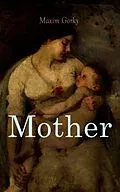
Maxim Gorky's Mother is a foundational work of socialist realism, dramatizing the political awakening of Pelageya Nilovna, a timid factory worker's mother who is drawn into the revolutionary movement through her son Pavel. Set amid the oppressive world of industrial Russia, the novel combines domestic pathos, political urgency, and symbolic transformation. Its prose is direct yet emotionally charged, turning private suffering into collective consciousness and making the maternal figure an emblem of historical rebirth. Gorky, born Alexei Maximovich Peshkov, knew poverty, labor, and social exclusion firsthand, experiences that shaped his lifelong sympathy for the dispossessed. By the time he wrote Mother in 1906, he had become closely associated with revolutionary circles and with the emerging literature of proletarian struggle. The novel reflects both his artistic mission and his ideological commitment: to give narrative dignity to workers and to imagine literature as an instrument of social change. Mother is recommended to readers interested in Russian literature, revolutionary history, and the evolution of politically engaged fiction. Though unmistakably didactic, it remains powerful for its moral clarity and human tenderness. It rewards those willing to read it not merely as propaganda, but as a landmark attempt to fuse art, ethics, and historical hope. This enriched edition has been carefully crafted to add value to your reading experience. - A succinct Introduction situates the work's timeless appeal and themes. - The Synopsis outlines the central plot, highlighting key developments without spoiling critical twists. - A detailed Historical Context immerses you in the era's events and influences that shaped the writing. - An Author Biography reveals milestones in the author's life, illuminating the personal insights behind the text. - A thorough Analysis dissects symbols, motifs, and character arcs to unearth underlying meanings. - Reflection questions prompt you to engage personally with the work's messages, connecting them to modern life. - Hand-picked Memorable Quotes shine a spotlight on moments of literary brilliance. - Interactive footnotes clarify unusual references, historical allusions, and archaic phrases for an effortless, more informed read.
Autorentext
Maxim Gorky (18681936) was a Russian and Soviet writer, a founder of the socialist realism literary method and a political activist. He was also a five-time nominee for the Nobel Prize in Literature.
Zusammenfassung
Mother is considered to be the only long work of Gorky on the Russian revolutionary movement and remains his best known work. He wrote the novel on a trip to the United States in 1906. The political agenda behind the novel was clear. In 1905, after the defeat of Russian's first revolution, Gorky tried to raise the spirit of the proletarian movement by conveying the political agenda among the readers through his work. Gorky was personally connected to the novel as it is based on real life events, revolving around Anna Zalomova and her son Piotr Zalomov. Gorky, being a distant relative of Anna Zalomova who visited Gorky's family when he was a child, had a deeper connection to the story.