What Israelis and Palestinians ? and everyone else ? can learn from South Africans and Rwandans about ending conflict and healing and rebuilding in the aftermath.
All conflicts end. It's in their nature. The only question is how much time and how many lives will be lost, and when the hard but necessary work of healing begins. Maya Savir, an Israeli professional in humanitarian and development work and peacebuilding, and a mother, spent years working in Rwanda and South Africa, countries that went through successful reconciliation processes many had thought impossible. In this book, she dares to ask whether what she observed and learned there can be applied to the Israeli-Palestinian conflict.
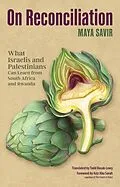
Reconciliation is an artichoke. It's not an onion, made up of layer upon layer you peel away until nothing is left. It has layers, yes, but at its center is a heart. This book peels away those characteristics that are not essential for reconciliation until all that is left is the heart. But before examining this heart, we take a close look at the outer layers in specific conflicts, because although they vary with context and may not all be necessary to bring about reconciliation, they are among the most noble and inspiring human expressions and can be part of the dynamics of reconciliation.
Savir invites readers to explore this process of reconciliation candidly and soberly, showing what it takes for peacemaking and restoration to unfold between peoples and within individuals after conflicts. She leads the reader on this journey with compassion, intellectual precision, literary skill, and conviction. Though healing is difficult to imagine in the wake of October 7 and the war in Gaza, On Reconciliation helps us to reconsider the limits of what is possible.
Autorentext
Maya Savir has been a human rights and peace activist all of her adult life. She serves as Israel country director for Search for Common Ground, the largest international organization dedicated to peacebuilding. A professional in humanitarian and development work, she spent a decade working in Africa, where the stories of Rwandans and South Africans she met inspired her to write this book. She is the author of two works of adult nonfiction, one young adult novel, three children's books and one work of adult fiction. The daughter of Oslo Accords architect Uri Savir, she lives in Tel Aviv with her husband and four children.
Todd Hasak-Lowy is a novelist, essayist, translator, and short story writer. He is a professor of creative writing and literature at the School of the Art Institute of Chicago.
Aziz Abu Sarah, a Palestinian whose brother was killed in the conflict, is the co-author of The Future Is Peace. He runs a nonprofit dedicated to Middle East peace, and a travel company offering tours aimed at building empathy.