Vorwort
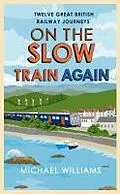
In a follow-up to the hugely successful On The Slow Train, here are twelve more of the most beautiful and historic railway journeys in Britain. Extravagantly well-reviewed, the Daily Mail eulogised author Michael Williams' ability to recreate 'a magical world barely changed since the golden age of rail'.
Autorentext
Michael Williams writes widely on railways for many publications. He is a veteran Fleet Street journalist, having held many senior positions, including Deputy Editor of the Independent on Sunday, Executive Editor of the Independent and Head of News at The Sunday Times. He is currently Senior Lecturer in the School of Journalism, Media and Communication at the University of Central Lancashire.
Klappentext
'One man's joyous account of his two-year, 30,000 mile quest to find Britain's most enchanting rail journeys' Daily Mail
In this companion volume to On the Slow Train, Michael Williams again takes us to another era of rail travel.
Here is the 'train to the end of the world' running for more than four splendid hours through lake, loch and moorland from Inverness to Wick. He discovers a perfect country branch line in London's commuterland, and travels on one of the slowest services in the land along the shores of the Dovey estuary to the west of Wales. He takes the stopping train across the Pennines on a line with so few services that its glorious scenery is a secret known only to the regulars. Here too is the little branch line to the fishing port of Looe in Cornwall, rescued from closure in the 1960s and now celebrating its 150th anniversary taking families on holiday to the seaside.
From the most luxurious and historic - aboard the Orient Express - to the most futuristic - on the driverless trains of London's Docklands Light Railway - here is a unique travel companion celebrating the treasures of our railway heritage from one of Britain's most knowledgeable railway writers.
'A delicious read, an evocative tour of our heritage, and a past that, in some places at least, still remains in the present' Evening Standard