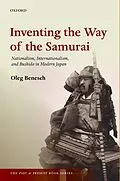
Inventing the Way of the Samurai examines the development of the 'way of the samurai' - bushid - which is popularly viewed as a defining element of the Japanese national character and even the 'soul of Japan'. Rather than a continuation of ancient traditions, however, bushid developed from a search for identity during Japan's modernization in the late nineteenth century. The former samurai class were widely viewed as a relic of a bygone age in the 1880s, and the first significant discussions of bushid at the end of the decade were strongly influenced by contemporary European ideals of gentlemen and chivalry. At the same time, Japanese thinkers increasingly looked to their own traditions in search of sources of national identity, and this process accelerated as national confidence grew with military victories over China and Russia. Inventing the Way of the Samurai considers the people, events, and writings that drove the rapid growth of bushid , which came to emphasize martial virtues and absolute loyalty to the emperor. In the early twentieth century, bushid became a core subject in civilian and military education, and was a key ideological pillar supporting the imperial state until its collapse in 1945. The close identification of bushid with Japanese militarism meant that it was rejected immediately after the war, but different interpretations of bushid were soon revived by both Japanese and foreign commentators seeking to explain Japan's past, present, and future. This volume further explores the factors behind the resurgence of bushid , which has proven resilient through 130 years of dramatic social, political, and cultural change.
Autorentext
Oleg Benesch is Anniversary Research Lecturer in History, specializing in the history of early modern and modern Japan. Before arriving at the University of York, Dr Benesch was Past & Present Fellow at the Institute of Historical Research at the University of London. He has spent almost six years living and researching in Japan, including two years each at Hitotsubashi University and Reitaku University in Tokyo. Dr Benesch's publications and teaching interests cover a variety of fields, including Japanese intellectual, religious, and social history, Chinese intellectual history, as well as the transnational history of modern East Asia. He has presented his research findings at academic conferences and invited lectures throughout East Asia, Europe, North America, and Australia.
Zusammenfassung
Inventing the Way of the Samurai examines the development of the 'way of the samurai' - bushido - which is popularly viewed as a defining element of the Japanese national character and even the 'soul of Japan'. Rather than a continuation of ancient traditions, however, bushido developed from a search for identity during Japan's modernization in the late nineteenth century. The former samurai class were widely viewed as a relic ofa bygone age in the 1880s, and the first significant discussions of bushidA at the end of the decade were strongly influenced by contemporary European ideals of gentlemen and chivalry. At the same time, Japanese thinkers increasingly looked to their own traditions in search of sources of national identity, and this process acceleratedas national confidence grew with military victories over China and Russia. Inventing the Way of the Samurai considers the people, events, and writings that drove the rapid growth of bushidA , which came to emphasize martial virtues and absolute loyalty to the emperor. In the early twentieth century, bushidA became a core subject in civilian and military education, and was a key ideological pillar supporting the imperial state until its collapse in 1945. The close identification of bushidA with Japanese militarismmeant that it was rejected immediately after the war, but different interpretations of bushidA were soon revived by both Japanese and foreign commentators seeking to explain Japan's past, present, and future. This volume further explores the factors behind the resurgence of bushidA , which has proven resilient through 130 years of dramatic social,political, and cultural change.
Inhalt
- Introduction
- 1: Backgrounds
- 2: First Explanations of Bushido in the Meiji Era
- 3: The Early Bushido Boom, 1894-1905
- 4: The Late Bushido Boom, 1905-1914
- 5: The End of the Bushido Boom
- 6: The Showa Bushido Resurgence
- 7: Bushido in Postwar Japan
- Conclusions and Considerations
- Select Bibliography