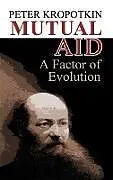
Peter Kropotkin
Klappentext
"Kropotkin's basic argument is correct," noted evolutionary biologist Stephen Jay Gould. "Struggle does occur in many modes, and some lead to cooperation among members of a species as the best pathway to advantage for individuals." Anthropologist Ashley Montagu declared that "Mutual Aid will never be any more out of date than will the Declaration of Independence. New facts may increasingly become available, but we can already see that they will serve largely to support Kropotkin's conclusion that 'in the ethical progress of man, mutual support?not mutual struggle?has had the leading part.'" Physician and author Alex Comfort asserted that "Kropotkin profoundly influenced human biology by his theory of Mutual Aid. . . . He was one of the first systematic students of animal communities, and may be regarded as the founder of modern social ecology."
Inhalt
Preface to the 1914 Edition
Introduction
I.-II. Mutual Aid Among Animals
III. Mutual Aid Among Savages
IV. Mutual Aid Among the Barbarians
V.-VI. Mutual Aid in the Mediæval City
VII.-VIII. Mutual Aid Amongst Ourselves
Conclusion
Appendix A
I. Swarms of Butterflies, Dragon-flies, etc.
II. The Ants
III. Nesting Associations
IV. Sociability of Animals
V. Checks to Over-Multiplication
VI. Adaptations to Avoid Competition
VII. The Origin of the Family
VIII. Destruction of Private Property on the Grave
IX. The "Undivided Family"
X. The Origin of the Guilds
XI. The Market and the Mediæval City
XII. Mutual-Aid Arrangements in the Villages of Netherlands at the Present Day
Appendix B
The Struggle for Existence in Human Society by Thomas H. Huxley
Index