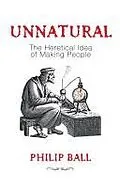
Can we make a human being?
The question has been asked for many centuries, and has produced recipes ranging from the clay golem of Jewish legend to the mass-produced test-tube babies in Brave New World. Unnatural delves beneath the surface of the cultural history of 'anthropoeia' - the artificial creation of people - to explore what it tells us about our views on life, humanity, creativity and technology, and the soul.
Philip Ball traces the threads that link the legendary inventor Daedalus, Goethe's tragic Faust, the automata-making magicians of E.T.A. Hoffman and Mary Shelley's Victor Frankenstein. He argues that these old tales and myths are alive and well, subtly manipulating the current debates about assisted conception, embryo research and human cloning, which have at last made the idea of 'making people' into flesh and blood reality.
Vorwort
A fascinating exploration of the cultural history of the creation of artificial people - what it tells us about our views on life, humanity, creativity and technology, and the soul.
Autorentext
Philip Ball
Klappentext
Can we make a human being?
The question has been asked for many centuries, and has produced recipes ranging from the clay golem of Jewish legend to the mass-produced test-tube babies in Brave New World. Unnatural delves beneath the surface of the cultural history of 'anthropoeia' - the artificial creation of people - to explore what it tells us about our views on life, humanity, creativity and technology, and the soul. Philip Ball traces the threads that link the legendary inventor Daedalus, Goethe's tragic Faust, the automata-making magicians of E.T.A. Hoffman and Mary Shelley's Victor Frankenstein. He argues that these old tales and myths are alive and well, subtly manipulating the current debates about assisted conception, embryo research and human cloning, which have at last made the idea of 'making people' into flesh and blood reality.
'A brave, sane and intellectually nimble account of a topic which only gets more ambiguous with each scientific advance. Unnatural is fascinating and engaging, and a polemic only for cool heads and open hearts when dealing with issues of such serious and profound complexity' Scotland on Sunday
'Meticulous, witty and sometimes provocative' Sunday Times
'Labelling Ball a science writer sells his writing short, for its value lies above all in a range that dissolves the awkward silences between science and the larger culture of which it is part' Independent
'Philip Ball presents the ethical dilemmas, ancient and modern, with intelligence and assurance' The Times
'The two cultures of science and art...happily cohabit inside Ball's compendious, eclectic head' Observer