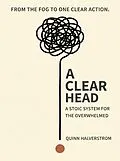
What if the exhaustion you feel isn't a character flaw, but a design mismatch between your overloaded mind and a job it was never built to do?
Every unfinished task, vague obligation, and half-formed worry stays quietly active in your head, draining the attention you need to think, decide, and be present. The result is a low-grade fog of dread that no amount of willpower can clear.
A Clear Head weaves together cognitive science and the practical wisdom of the Stoics into a single, reliable system. Instead of holding everything in your head, you learn to capture it, clarify it, and place it in trusted external structures-so your mind is finally free to do what it does best.
Inside, you'll discover:
- Why your brain is a workbench, not a warehouse, and how to stop using it for storage
- The weekly review that keeps your entire system alive and trustworthy
- A simple five-question filter for sorting anything that lands on you
- How to turn vague, stalled projects into visible next actions
- The two-minute reflex and micro-habits that prevent backlog from building
- How to connect daily tasks to your deeper values and long-range direction
Stop carrying the weight of everything you might forget-and reclaim the clarity to focus on what actually matters.
Autorentext
Quinn Halverstrom is an American philosopher who applies the practical ethics of ancient thinkers to the realities of modern life-career, decisions, and one's relationship with risk and time. He received a classical education with a double major in philosophy and history at a leading American university and earned a doctorate in ancient philosophy. For roughly twelve years he worked in academia, specializing in the Stoic tradition and its application to the ethics of decision-making. Noticing that the greatest demand for philosophy comes not from lecture halls but from practicing executives and entrepreneurs, he gradually shifted toward independent writing and a closed advisory practice. Out of decades of reading primary sources and working with living clients, he developed his own "School of Clear Action": a discipline of separating what is within one's power from what is not, and translating every decision out of the fog of emotion into one clear action. Today he runs an independent author's practice, closed mentoring for entrepreneurs and executives, and small reading groups. He writes short, dense books in which the applied principles of the ancient philosophers are stitched together with modern stories and decision scenarios.