Autorentext
Renata Adler was born in Milan and raised in Connecticut. She received a B.A. from Bryn Mawr, an M.A. from Harvard, a D.d'E.S. from the Sorbonne, a J.D. from Yale Law School, and an honorary LL.D. from Georgetown. Adler became a staff writer at The New Yorker in 1963 and, except for a year as the chief film critic of The New York Times, remained at The New Yorker for the next four decades. Her books include A Year in the Dark (1969); Toward a Radical Middle (1970); Reckless Disregard: Westmoreland v. CBS et al., Sharon v. Time (1986); Canaries in the Mineshaft (2001); Gone: The Last Days of The New Yorker (1999); Irreparable Harm: The U.S. Supreme Court and the Decision That Made George W. Bush President (2004); and the novels Speedboat (1976, Ernest Hemingway Award for Best First Novel) and Pitch Dark (1983), both available as NYRB Classics.
Michael Wolff, currently a contributing editor at Vanity Fair and a columnist for The Guardian, USA Today, and British GQ, is one of the most prominent journalists and pundits in the nation. He has written numerous best-selling books, including The Man Who Owns the News: Inside the Secret World of Rupert Murdoch, Burn Rate, and Autumn of the Moguls. He appears often on the lecture circuit and is a frequent guest on network and cable news shows.
Klappentext
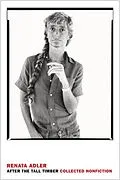
For decades, Renata Adler's writing has upheld and defined the highest standards of investigative journalism. A staff writer at The New Yorker from 1963 to 2001, Adler has reported on civil rights from Selma, Alabama; on the war in Biafra, the Six-Day War, and the Vietnam War; on the Nixon impeachment inquiry and Congress. She has also written about cultural matters, films (as chief film critic for The New York Times), books, politics, and pop music. Like many journalists, she has put herself in harm's way in order to give us the news, not the "news" we have become accustomed to-celebrity journalism, conventional wisdom, received ideas-but the actual story, an account unfettered by ideology or consensus. The peril that Adler places herself in comes specifically from speaking up (on the basis of careful research, common sense, original thought) when too many other writers have joined the pack. In this most basic and moral sense, Adler is one of the few independent journalists writing in America today. This collection of Adler's nonfiction draws on her early essays, reporting, and criticism, which describe the major crises and hopeful turmoil of the 1960s, and more recent pieces concerned with, in her words, "misrepresentation, coercion, and abuse of public process, and the journalist's role in it." Also included are writings on film, television, and music, and several uncollected essays on Jayson Blair and the Times, and the Supreme Court's decision in Bush v. Gore. A new epilogue by Adler provides an invaluable and long-overdue assessment of our culture today from one of its foremost chroniclers.
Inhalt
Renata Adler, Collected Nonfiction CONTENTS (PROVISIONAL): Introduction (new, tk) Politics: Introduction from Toward a Radical Middle The March for Non-Violence from Selma Fly Trans-Love Airways The Black Power March in Mississippi Letter from the Six-Day War Radicalism in Debacle: the Palmer House Introduction from Canaries in the Mineshaft Letter from Biafra But Ohio... : The National Guard Searching for the Real Nixon Scandal The Justices and the Journalists G. Gordon Liddy in America House Critic The Extreme Nominee Decoding the Starr Report A Court of No Appeal Irreparable Harm The Porch Overlooks No Such Thing Culture: Introduction from A Year in the Dark The Movies Make Heroes of Them All Cold Blood, Cheap Fiction The New Sound, Circa 1964 Selling an Enraged Bread Pudding Concentration, Squares, Jeopardy and Bouillon Cubes Afternoon Television Cookie, Oscar, Grover, & co. Epilogue - Newtown, our culture today (new, tk)