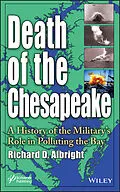
This unique book focuses attention on the failure of current efforts to cleanup the Chesapeake Bay and suggests an approach often used in cleaning up environmentally damaged sites
While military munitions sources contribute significantly to the pollution and degradation of Chesapeake Bay, they have been completely overlooked in many of the efforts to restore the Bay. Death of the Chesapeake explores this important aspect of the nation's environmental health. The book also recognizes for the first time that efforts to restore the Bay have failed because of the violation of a fundamental precept of environmental cleanup; that is, to sample the site and see what's there. The Bay itself has never been sampled.
Thus, this book presents a view of the environmental condition of Chesapeake Bay that is totally unique. It covers a part of the history of the Bay that is not widely known, including how the Bay was formed. It presents a mixture of science, military history, and novel solutions to the Bay's degradation. In so doing, the author examines the military use of the Bay and reveals the extent that munitions dumpsites containing nitrogen and phosphorus as well as chemical warfare material are affecting the environment. The book concludes with the author's own cleanup plan, which, if implemented, would go a long way toward restoring health to the Bay. The book is supplemented with many photographs and maps.
Autorentext
Richard D. Albright, a chemical weapons and ordnance
expert, has a bachelor's from the University of Michigan, a master
of science in environmental health from George Washington
University and doctorates from Wayne State and an online
university. A former Army officer, he wrote a science bestseller,
Cleanup of Chemical and Explosive Munitions, now in its
second edition; has testified before Congress, state government,
and in federal courts on environmental issues. His work has been
featured in Washingtonian magazine, The Washington Post,
The News-Herald (Northeast Ohio), The Press of Atlantic
City, The New York Times and The Kansas City Star. He
has worked for 20 years to restore the Chesapeake Bay and sailed
the Bay for 40 years. He won the Cafritz prize for his work
cleaning up a chemical weapons site.
Inhalt
Preface xiii
Special Recognition for Those Who Enlightened the Author on Underwater Issues or on the Chesapeake Bay Itself xv
List of Acronyms xvii
Introduction xix
1 The Formation of the Bay and Its Drainage Area 1
References 5
2 Nutrient Dynamics, Depletion, and Replenishment 7
2.1 Nutrient Loads and Oxygen Depletion 7
2.2 Nitrogen and Phosphorus from Munitions 8
2.3 Munitions Disposal Areas 9
2.4 Chemical Weapons Disposal in the Bay 10
2.5 Total Yearly Contaminant Loads from Federal Facilities Entering the Chesapeake Bay 11
2.6 Sewage Contamination by Military Facilities 11
References 12
3 Safety Issues with Old Munitions 15
3.1 Old Explosives Can Spontaneously Detonate 17
References 27
4 Artillery Shells in the Bay 29
4.1 Bloodsworth Island Range 29
4.2 Seacoast Artillery 33
4.3 Fort Meade 35
4.4 Naval Research Laboratory Chesapeake Bay Detachment 36
4.5 Aberdeen Proving Ground 36
References 37
5 Bombs in the Bay 39
5.1 Langley AFB 40
5.2 Tangier Island 43
5.3 Atlantic Test Ranges, Patuxent River, Maryland 45
5.4 Plum Tree Island 49
5.5 Ragged Point 51
5.6 Hebron Bomber Airport (Intersection of Route 50 & Route 347) 52
5.7 Accidental Bombing of Wittman, MD 52
References 54
6 Mines and Torpedoes in the Bay 55
6.1 The Disappearing Droids of Chesapeake Bay 56
6.2 Patuxent Naval Mine Warfare Test Station 57
References 59
7 Military Munitions and Explosives Factories 61
7.1 Triumph Industries 61
7.2 US Penniman Shell Loading Plant 63
7.3 Chestertown, MD, Munitions Plant 64
References 64
8 Contamination from Military Constituents Leading to Environmental and Human Health Concerns 65
8.1 Potential Health Effects of the Munitions Constituents Closely Associated with Military Munitions 66
8.2 Perchlorates 67
8.3 Lead 71
8.4 Explosive Contaminants 72
8.5 Sampling for Military Contaminants 76
References 76
9 Chemical Weapons Sites on Chesapeake Bay or in the Watershed 79
9.1 Aberdeen Proving Ground 79
9.2 Pooles Island 91
9.3 Berlin, MD 91
9.4 American University Experiment Station 92
9.5 Patuxent River Chemical Incineration 97
9.6 Langley 97
9.7 Naval Research Laboratory Chesapeake Bay Detachment 97
9.8 Washington Navy Yard 102
9.9 Tidewater Community College Suffolk 103
9.10 Other Hampton Rhodes, Norfolk, Virginia Beach Sites 103
References 104
10 Military Facilities Grouped by Specic Areas or on Specic Rivers 107
10.1 Potomac River 107
10.2 Anacostia River 119
10.3 Severn River 128
10.4 Norfolk (Hampton Rhodes Area) 128
References 134
11 Radioactive Contamination 137
References 139
12 PCB and Other Ship Contamination 141
12.1 Navy Use of Polychlorinated Biphenyls 141
References 147
13 Environmental Justice 149
References 151
14 Cleaning Up the Bay's Munitons 153
Conclusion 153
References 158
Appendix I 159
Executive Order and Comments 159
Appendix II 167
Laws Protecting the Chesapeake Bay and Other Bodies of Water 167
Appendix III 173
Military Facilities in The Norfolk, Virginia Area Coast Guard Restrictions Due To Military Opperations 173
...