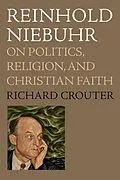
A primer on the current "Niebuhr revival" of the political left and right, this book traces the significance of Reinhold Niebuhr's thought for secular as well as deeply Christian minds. Placed in the context of religious and cultural history, Niebuhr's theological views deepen and challenge contemporary expertise on issues of war, peace, economic, and personal security. While rejecting cynical pessimism and naive optimism, Niebuhr's Christian realism reinvigorates age-old teachings of the Bible, St. Paul, Augustine, and Kierkegaard. His thought enriches present-day debates between science and religion and between atheists, agnostics, and believers. To live with Niebuhr's legacy is to combine critical acumen with humble self-awareness. It is to pursue a larger common good - for him, God-given - that is shared among individuals, nations, and the world community.
Autorentext
Richard Crouter is the John M. and Elizabeth W. Musser Professor of Religious Studies Emeritus at Carleton College in Minnesota. He is co-editor of the Journal for the History of Modern Theology and author of Friedrich Schleiermacher: Between Enlightenment and Romanticism (2005).
Zusammenfassung
A primer on the current "e;Niebuhr revival"e; of the political left and right, this book traces the significance of Reinhold Niebuhr's thought for secular as well as deeply Christian minds. Placed in the context of religious and cultural history, Niebuhr's theological views deepen and challenge contemporary expertise on issues of war, peace, economic, and personal security. While rejecting cynical pessimism and naive optimism, Niebuhr's Christian realism reinvigorates age-old teachings of the Bible, St. Paul, Augustine, and Kierkegaard. His thought enriches present-day debates between science and religion and between atheists, agnostics, and believers. To live with Niebuhr's legacy is to combine critical acumen with humble self-awareness. It is to pursue a larger common good - for him, God-given - that is shared among individuals, nations, and the world community.
Inhalt
Table of Contents Acknowledgments page v 1. Why Niebuhr in a New Era? 3 2. Taking the Long View of History 19 3. Recognizing Human Ambiguity 41 4. Connecting with Wit and Words 59 5. Revisiting America with Irony 77 6. Debating Politics and the Christian Faith 96 7. Living with Niebuhr's Legacy 116 Notes 141 Index 159